
.png)
Kassow Robots – Robotic Solutions for Industrial Automation
Kassow Robots provide flexibility for automating industrial processes where handling, positioning and access to complex working areas are important requirements.
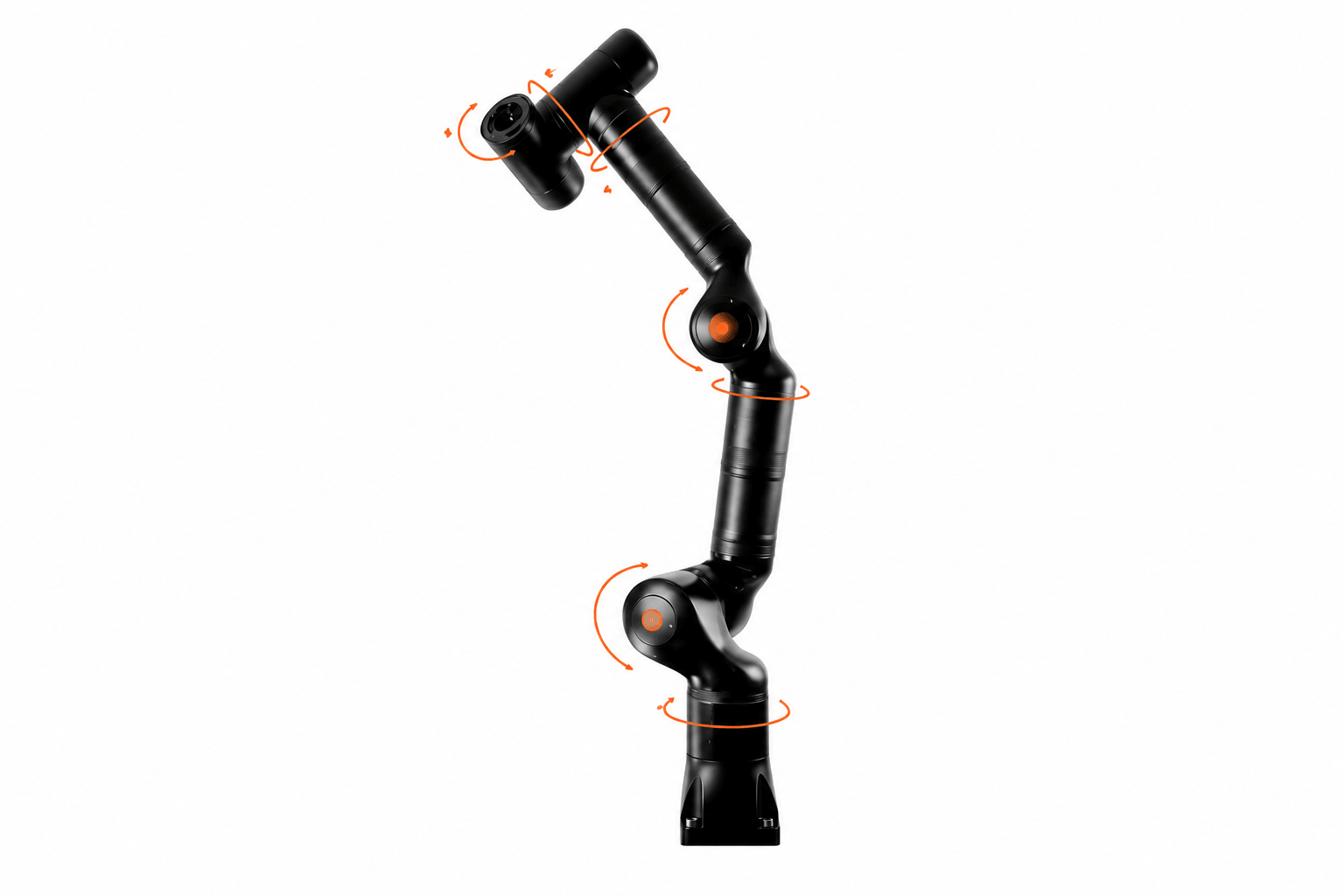
The 7-axis architecture provides an additional degree of freedom of movement and enables trajectories to be configured according to the available space and the existing equipment within the production cell.
As part of a complete application, the robot can be integrated with gripping systems, sensors, vision systems, conveyors, control equipment and other components required for the automated process.
Why 7 axes?
The seventh axis gives the robot an additional degree of freedom. This can facilitate obstacle avoidance, access to difficult positions and robot integration into cells where the available space is limited.
Kassow 7-Axis Collaborative Robots
In an industrial application, it is not only important for the robot to move from point A to point B. The trajectory between these positions can be influenced by machines, structures, conveyors, fixtures and other elements within the cell.
The 7-axis configuration of Kassow Robots provides additional possibilities for positioning the robot arm and performing the movements required by the process.
7 Axes
An additional degree of freedom for configuring robot movements.
Compact Spaces
Additional integration possibilities for cells with limited working space.
Accessibility
Access to difficult working positions and trajectory adaptation to the geometry of the application.
Integration
Integration of the robot with the equipment and technologies required by the industrial process.
Configurations for Different Reach and Payload Requirements
The robot is selected according to the requirements of the application: payload, required reach, workspace geometry and the operation to be automated.
Reach: 850 mm
Reach: 1000 mm
Reach: 1200 mm
Reach: 1400 mm
Reach: 1800 mm
The Right Robot Is Selected According to the Process
Reach and payload are only the starting point. Configuring a robotic solution requires an analysis of the product, cycle time, trajectories, available space, gripping system and the robot's interaction with other equipment.
Applications with Kassow Robots
Kassow Robots can be integrated into a wide range of industrial processes, from component handling and machine tending to palletizing, inspection and dispensing operations. The robot configuration and peripheral equipment are selected according to the requirements of each application.
Automated Handling and Positioning
Kassow Robots can pick up components from one point in the process and automatically position them in the next working area.
The 7-axis architecture provides flexibility when configuring trajectories, including applications where the robot must operate around machines or other equipment.
Controlled Dispensing and Application
Kassow Robots can be integrated into dispensing and application processes where the system mounted on the robot must move along a defined and controlled trajectory.
The flexibility of movement allows the trajectory to be adapted to the geometry of the component and its position within the industrial process.
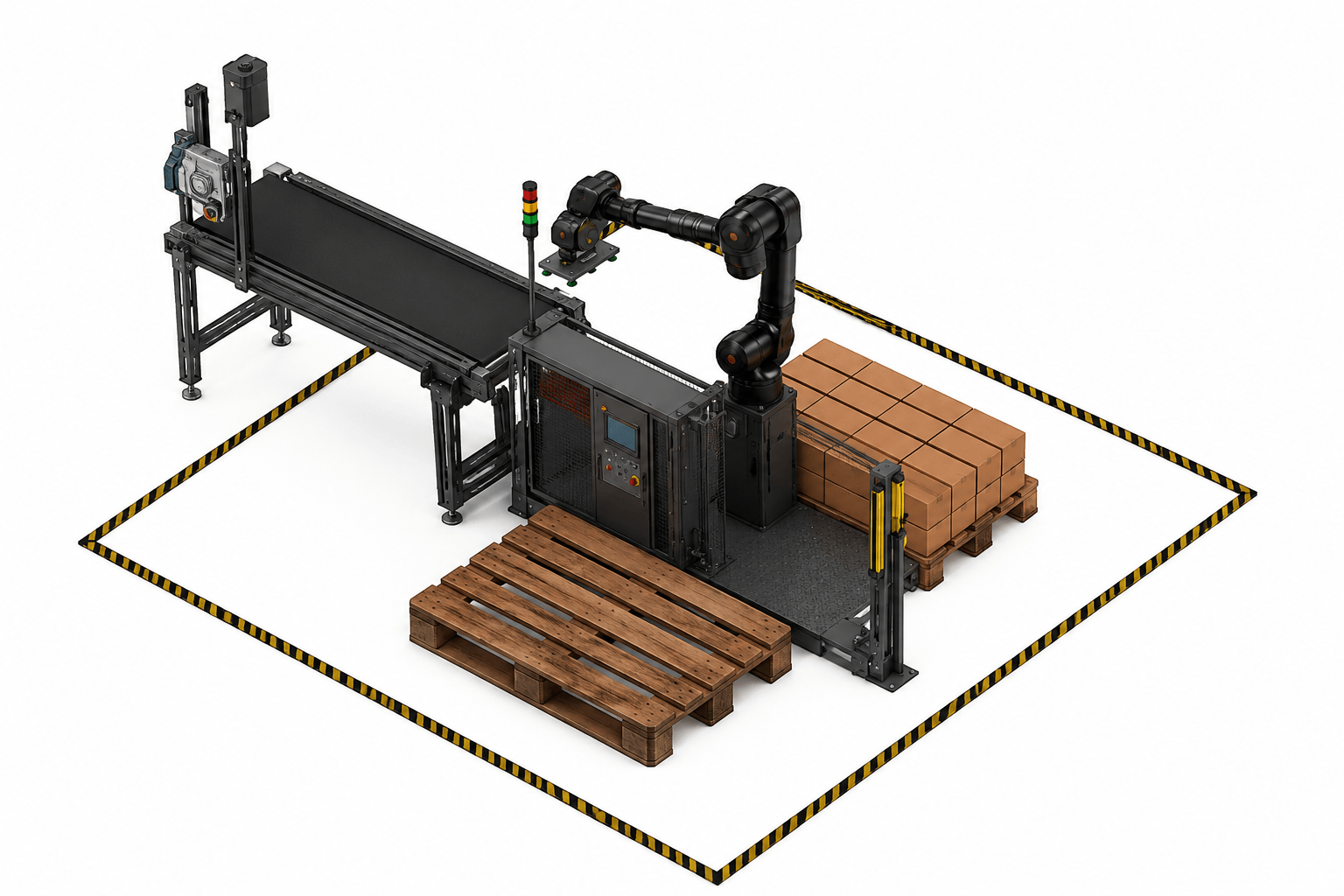
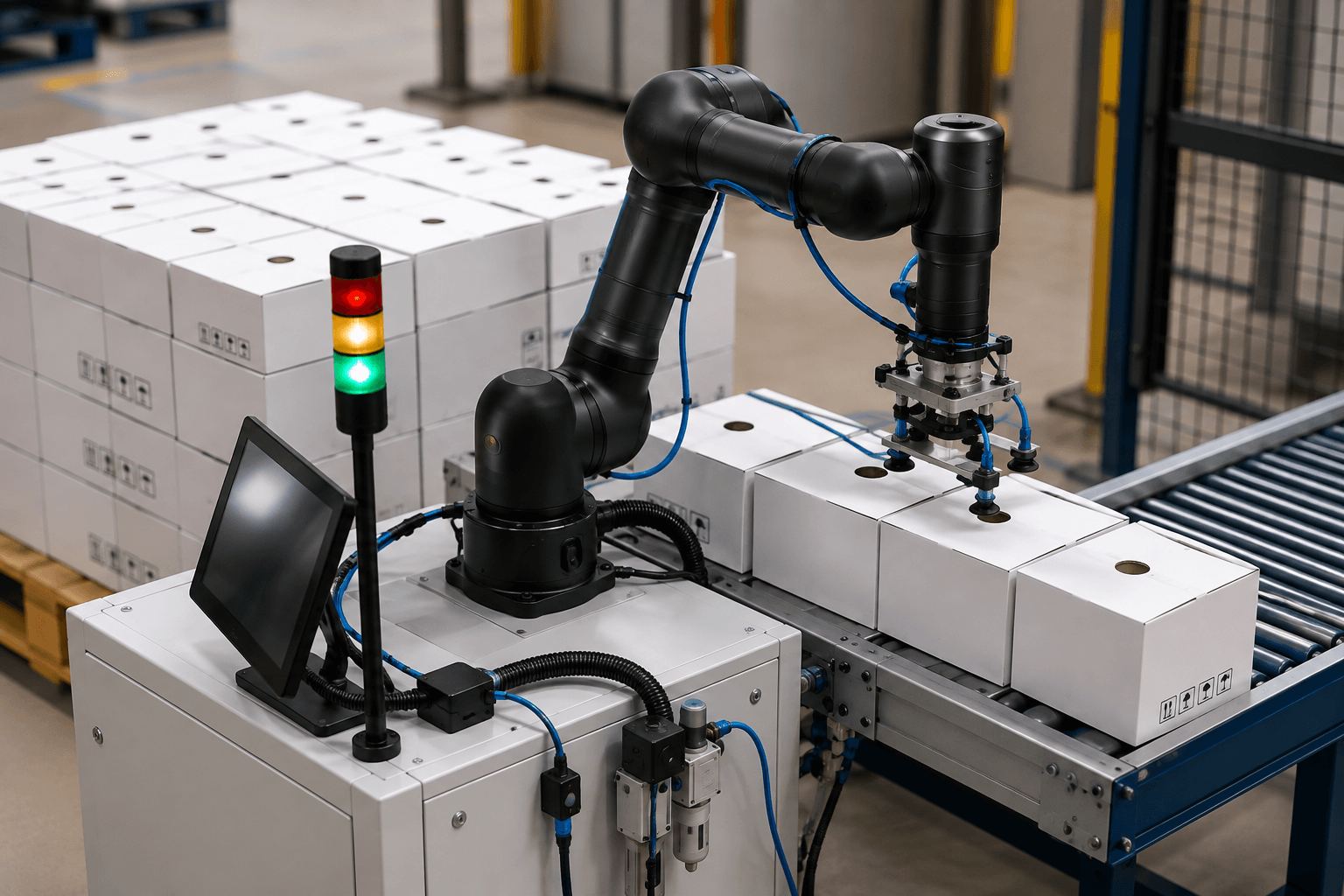
Automated Packaging and Palletizing
At the final stages of the production process, the robot can be used for product handling, packaging and automated palletizing.
The configuration is determined according to product weight, required reach, working height and the geometry of the palletizing system.
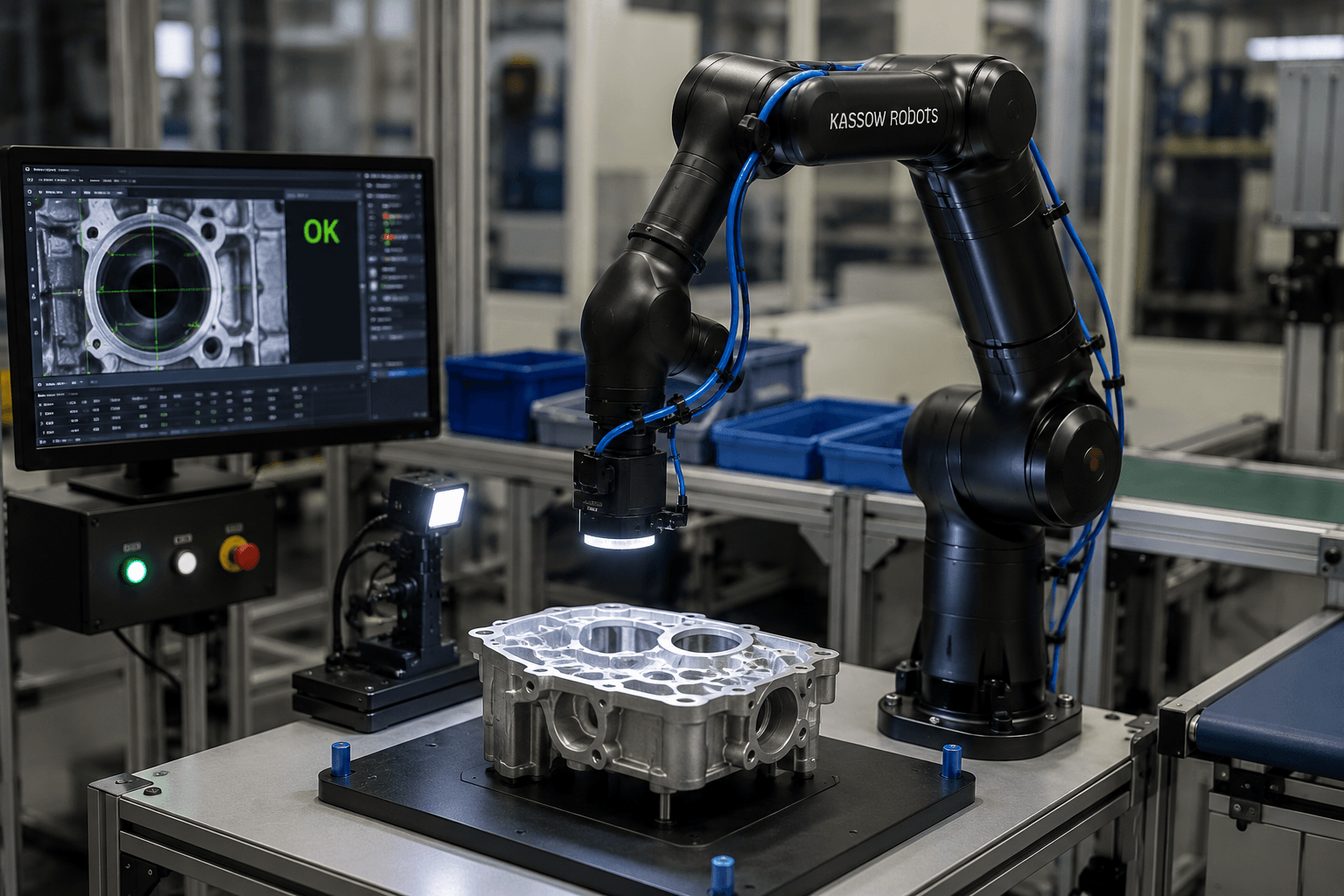
Inspection and Quality Control
The robot can be integrated with cameras, sensors and measurement systems to automate inspection and quality control operations.
Depending on the application, the robot can position the product within the inspection area or move the inspection system to multiple points on the component.
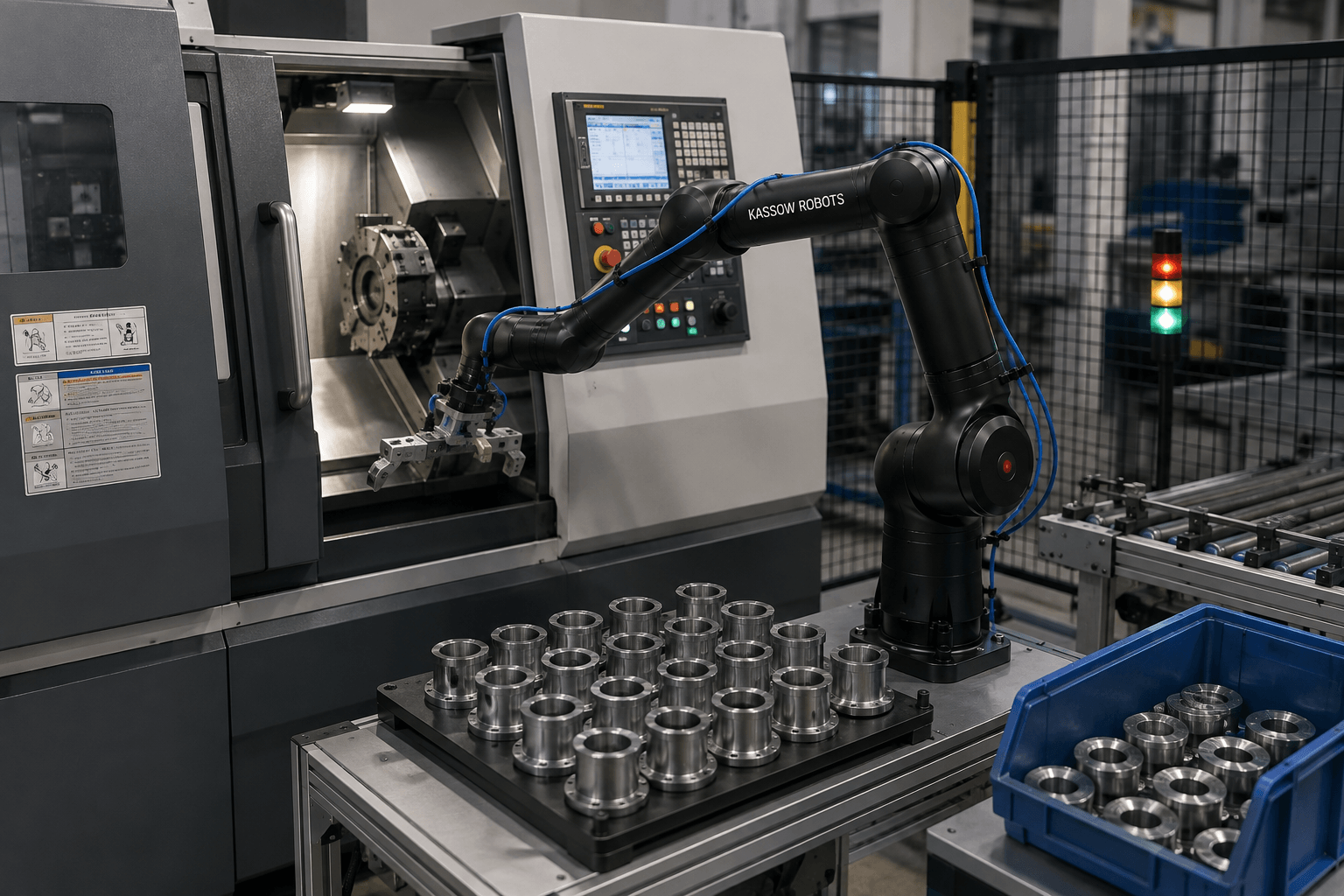
Automated Machine Loading and Unloading
In Machine Tending applications, the robot can pick up components, load them into the machine and remove the product once the operation has been completed.
The robot can be synchronized with the production equipment to automatically perform loading, processing and unloading sequences.
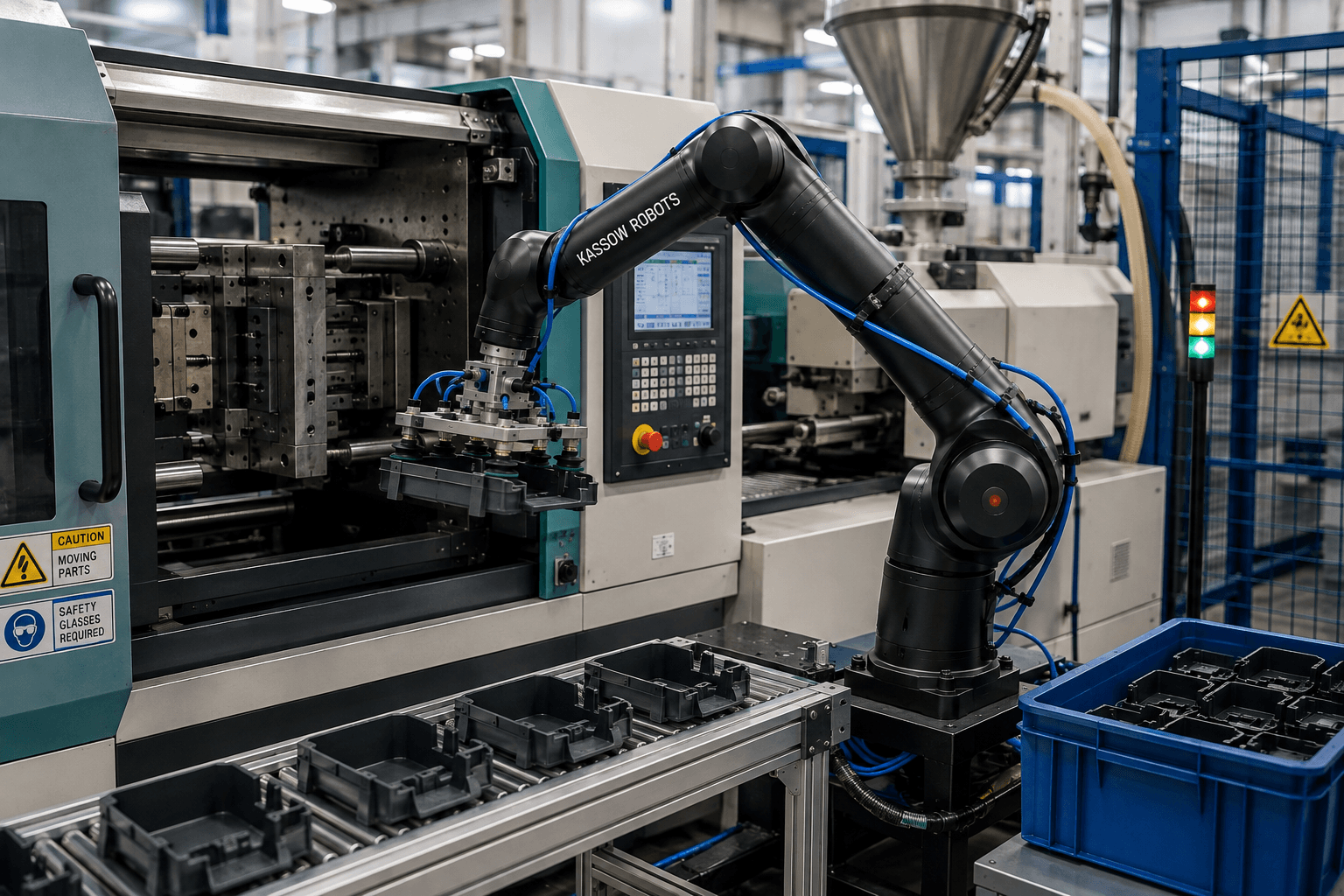
Automation of Injection Molding Processes
Kassow Robots can be integrated into injection molding applications for the automated removal and handling of components.
After removing the product, the robot can transfer it to the next stage of the process, such as inspection, processing, assembly or transport.
From Robot to a Complete Automation Solution
The robot is only one part of the application. To create a complete solution, the gripping system, sensors, control, safety, product transport and interaction with other equipment in the process must all be considered.
Integrating Kassow Robots into a Complete Automation System
Integrating a Kassow Robot into an industrial process involves more than selecting the robotic arm. The robot must be connected and synchronized with the equipment involved in the process so that the entire application operates as a unified system.
Depending on the application, the solution can include gripping systems, sensors, vision systems, industrial control, conveyors, mechanical structures and safety equipment.
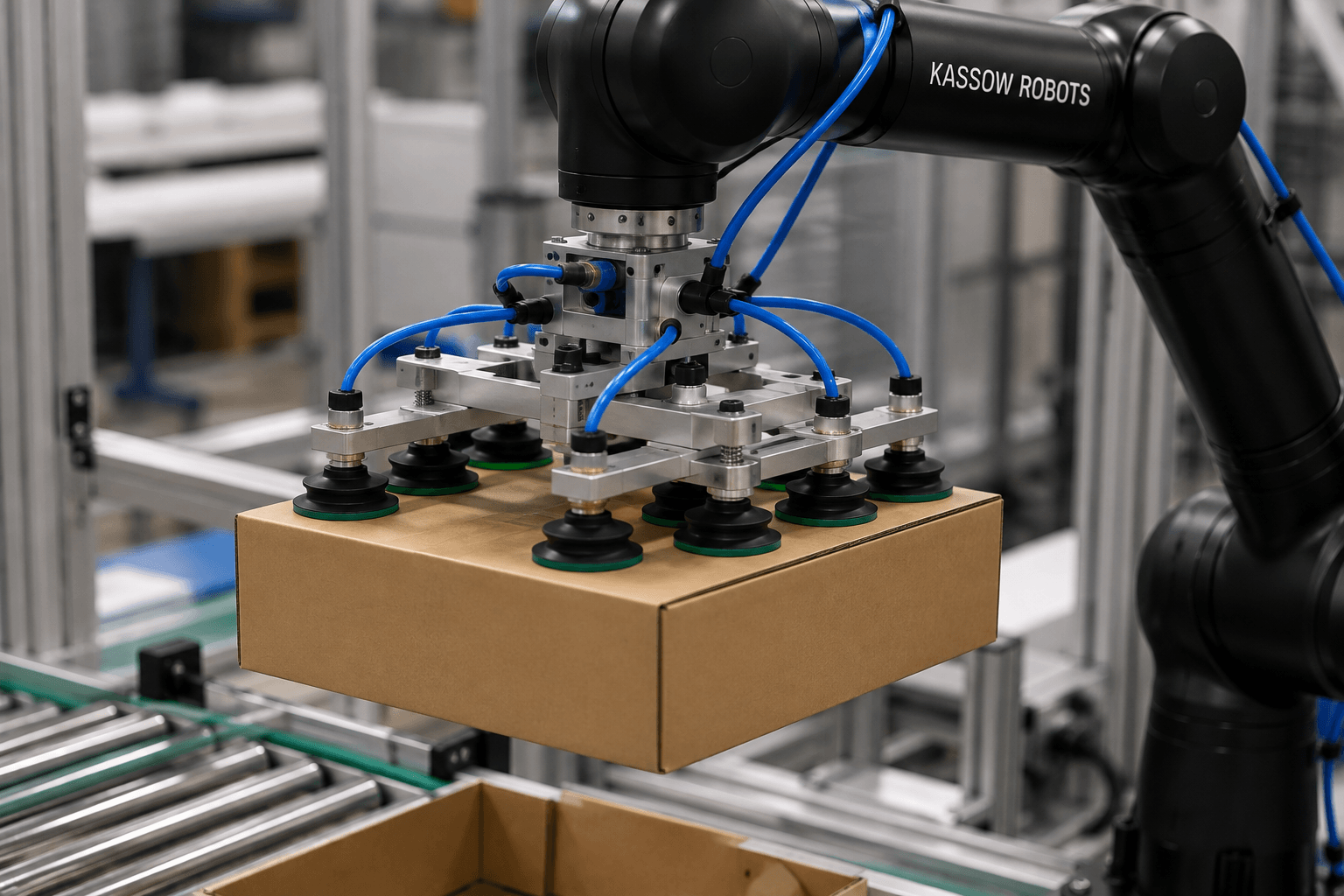
Gripping Systems Adapted to the Product
The interaction between the robot and the product is performed through the end-effector. It must be selected according to the geometry, weight, material and specific characteristics of the component being handled.
Depending on the process, mechanical, electric, pneumatic or vacuum gripping systems can be used, as well as devices specifically developed for the application.
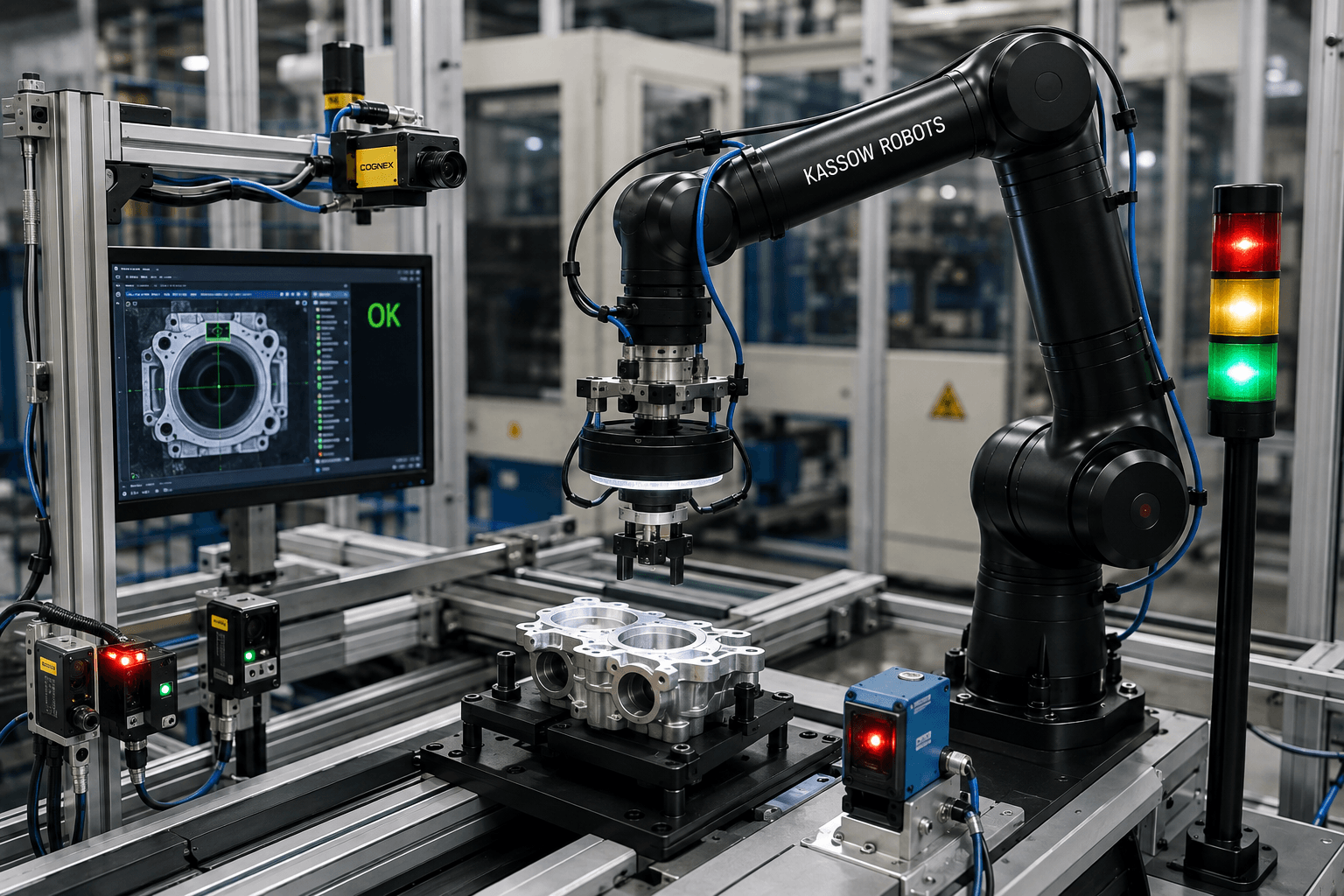
Detection, Positioning and Verification
Sensors and vision systems can provide the information required for product identification, position verification and coordination of the different stages of the process.
In applications where the position of components may vary, the vision system can be used to locate the product and adapt the robot's movement to the detected situation.
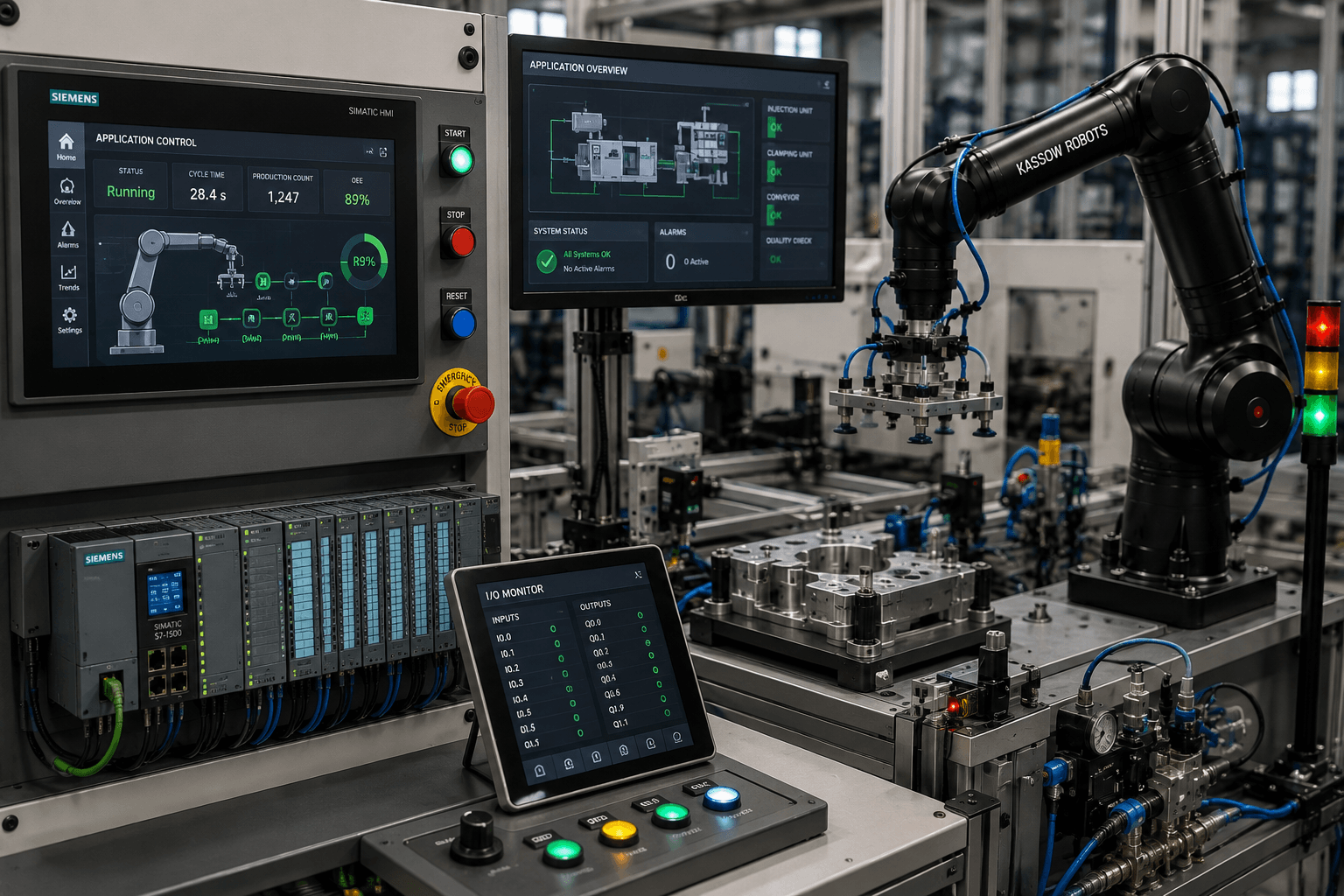
Integrating the Robot with Process Automation
The robot must communicate with the machines and equipment within the process to ensure the correct execution of automated sequences.
Through integration with industrial control systems, signals, sensors, actuators, machines and robot movements can be coordinated within the same application.
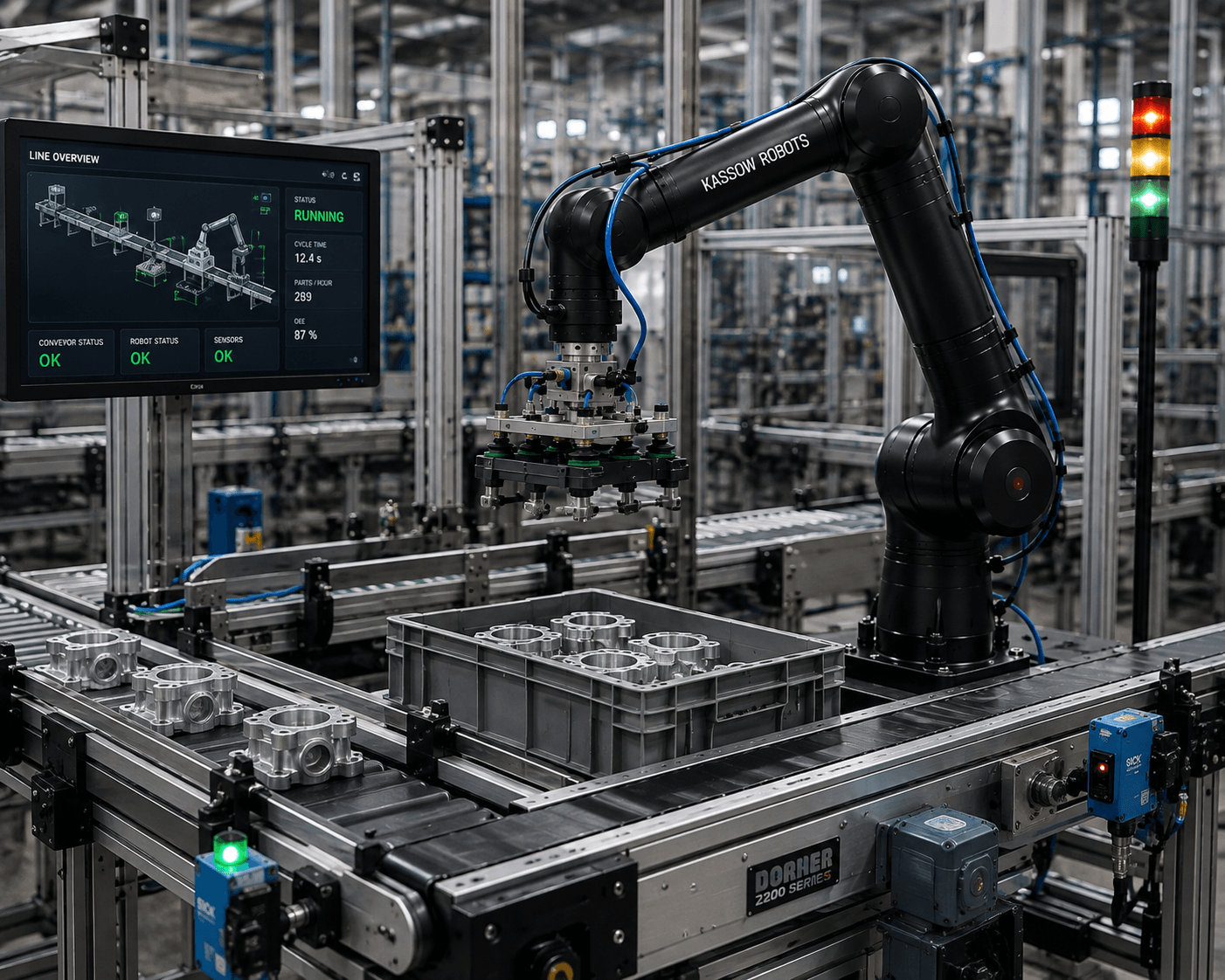
Integration with Transport Systems and Conveyors
In many automated processes, the robot operates together with transport systems and conveyors to feed products into or remove them from the working area.
Products can be detected, positioned and picked up by the robot, and once the operation is completed they can automatically continue to the next stage of the process.
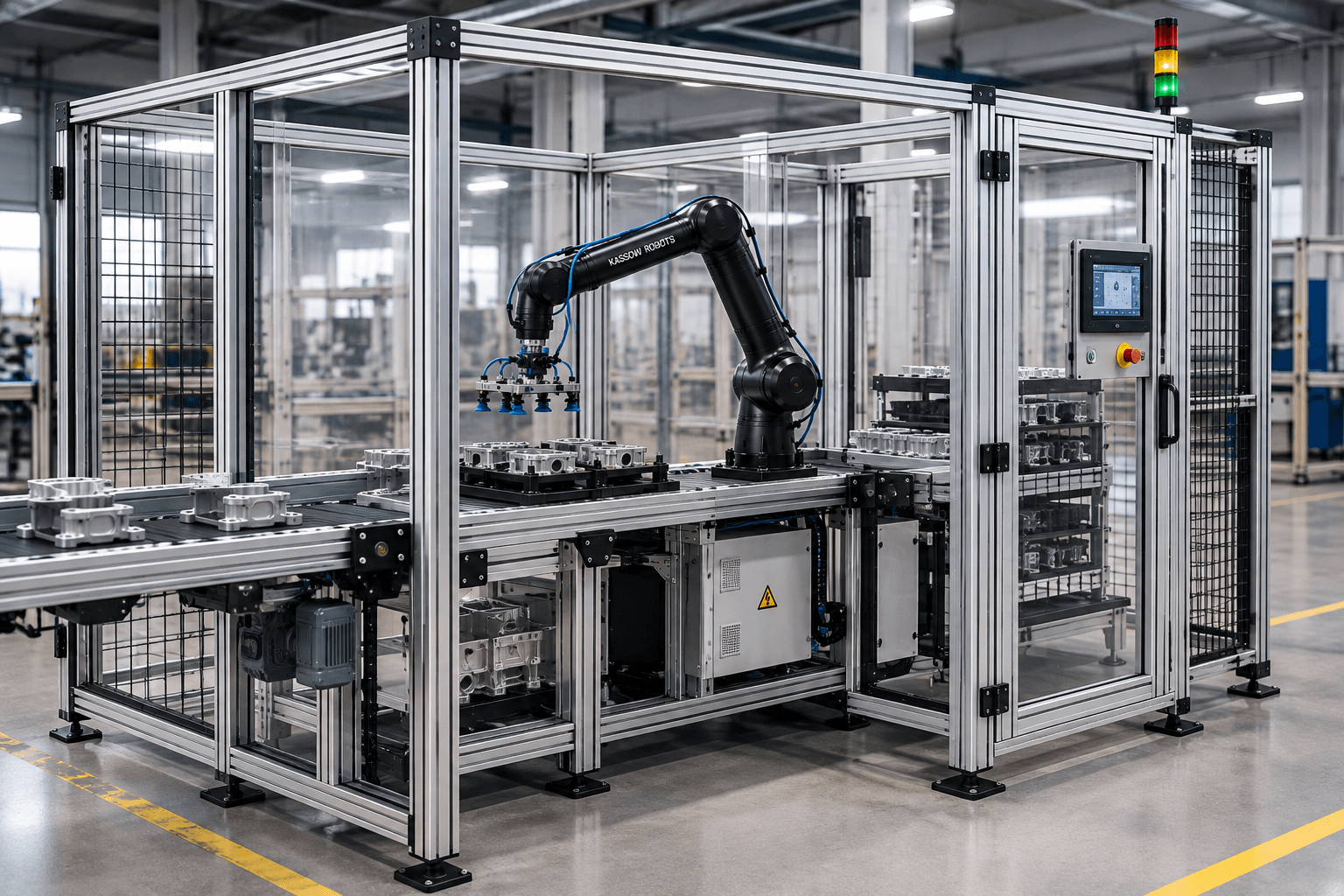
Structures and Cells Adapted to the Application
Robot positioning and equipment layout directly influence the operation and accessibility of the entire application.
The cell can include modular structures, frames, worktables, supports and protective elements configured according to the geometry of the process and the available space.
Safety of the Complete Robotic Application
Using a collaborative robot does not eliminate the need to assess the safety of the complete process. The application must be analyzed taking into account the robot, end-effector, product and surrounding equipment.
Depending on the configuration, detection systems, protective devices, safety functions and other measures adapted to the cell's operating mode may be required.
The Kassow Robot Becomes Part of the Entire Industrial Process
An efficient robotic application results from correctly integrating the robot with all the technologies required by the process, from product handling to control, transport and safety.
Do You Want to Integrate a Kassow Robot into Your Industrial Process?
We start with the requirements of your application and analyze the process, product, available space, payload, reach and the equipment with which the robot must interact.
The CreatX team can help you select the right configuration and integrate the robot into a complete industrial automation solution.