
.png)
Bosch Rexroth Hydraulic Solutions
Systems developed around the machine, the process and real operating requirements
CreatX Technology develops and integrates industrial hydraulic applications tailored to equipment, production processes and the technical requirements of each installation. Our approach starts with understanding the hydraulic circuit diagram, the components, the operating principles and the parameters that need to be controlled.
Solutions can include hydraulic pumps and motors, cylinders, directional and proportional valves, pressure and flow control systems, measurement, monitoring and diagnostic equipment, integrated into a coherent system tailored to the industrial application.

Hydraulics must be understood as a complete system
A hydraulic application is not simply about selecting a pump or a valve. Proper operation depends on the relationship between pressure, flow, load, control elements and actuators.
For this reason, the analysis starts with the hydraulic circuit diagram and the function of each component within the system, continues with the selection and configuration of the equipment, and concludes with verification of the actual operating parameters.
We analyse the system
We read the hydraulic circuit diagram and identify the functions, components and parameters relevant to the process.
We configure the solution
We select and configure the pumps, valves, drive units, control systems and required auxiliary components.
We measure and optimise
We verify pressure, flow and system behaviour to identify deviations and optimise operation.
Hydraulic Pumps, Motors and Drive Units
Hydraulic pumps and motors are central components of many industrial systems. Their selection and configuration must take into account required pressure, flow, load, duty cycle and process dynamics.
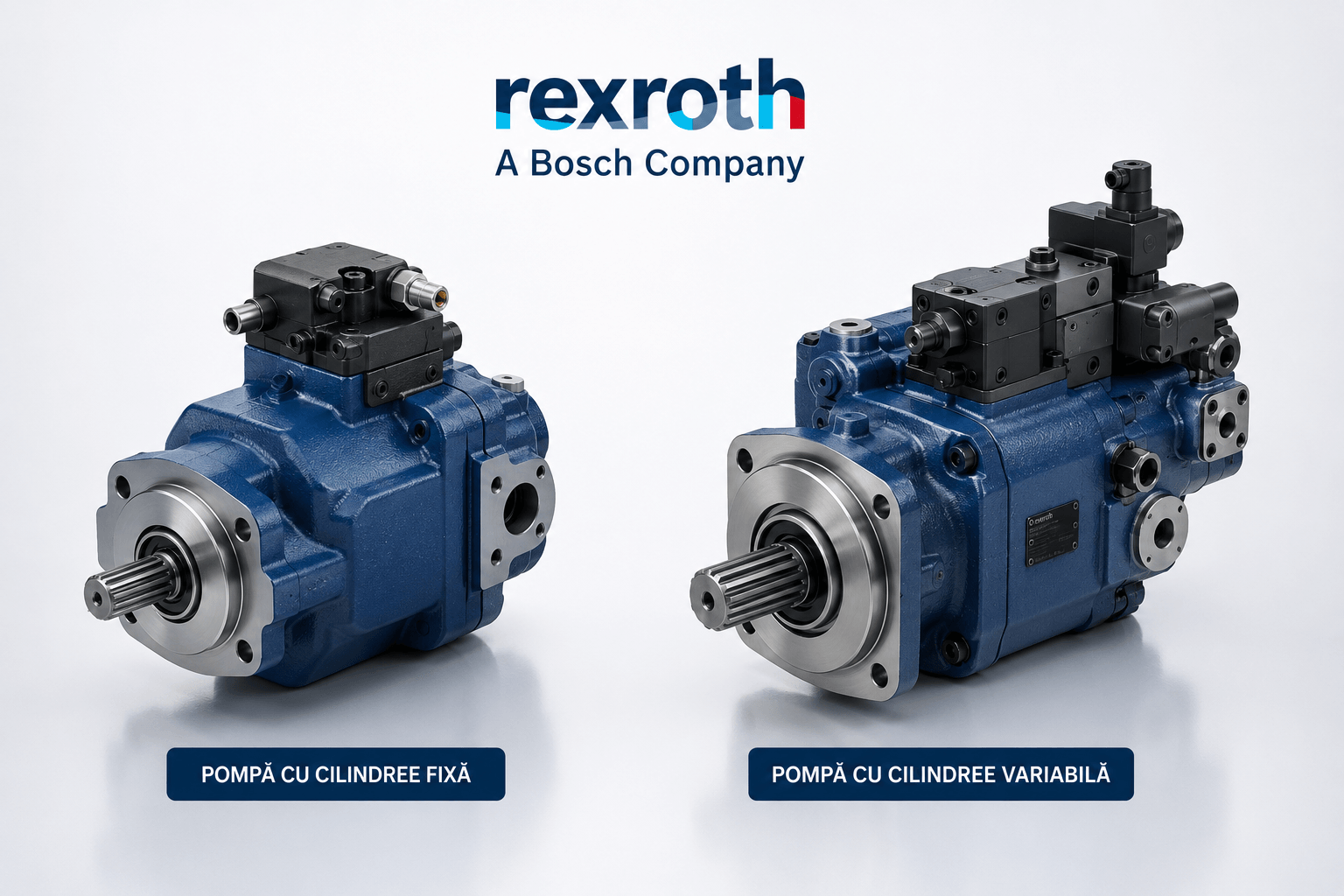
From fixed displacement to variable control
Depending on the application, hydraulic systems can use fixed displacement pumps or variable displacement pumps, with each solution providing a different way of adapting to process requirements.
Variable displacement systems enable more precise control of flow and pressure, making them suitable for applications where the load and energy demand change during the operating cycle.
Correct configuration of the controller and operating parameters is essential for system stability and for protecting hydraulic components.
Pressure and Flow Control
The behaviour of a hydraulic system is largely determined by how pressure and flow are controlled.
In industrial applications, correct adjustment allows the system to adapt to the load, control actuator speed and limit stress on the components.
Solutions can include separate pressure or flow control, as well as configurations where both parameters are controlled together to achieve optimal system response.

What we focus on in a hydraulic application
PRESSURE
Parameters are configured according to the load and the actual requirements of the application.
FLOW
Flow is correlated with the required speed and the dynamics of the industrial process.
EFFICIENCY
Correct configuration helps reduce unnecessary component loads and energy losses.
RELIABILITY
Monitoring temperature, load and pump behaviour helps prevent failures.
Hydraulic Valves and Control Technology
Hydraulic valves control the direction, pressure and flow of the fluid and determine how hydraulic power is distributed to the actuators.
Selecting the right valve type and understanding its behaviour within the circuit are essential for the stability, safety and precision of the application.
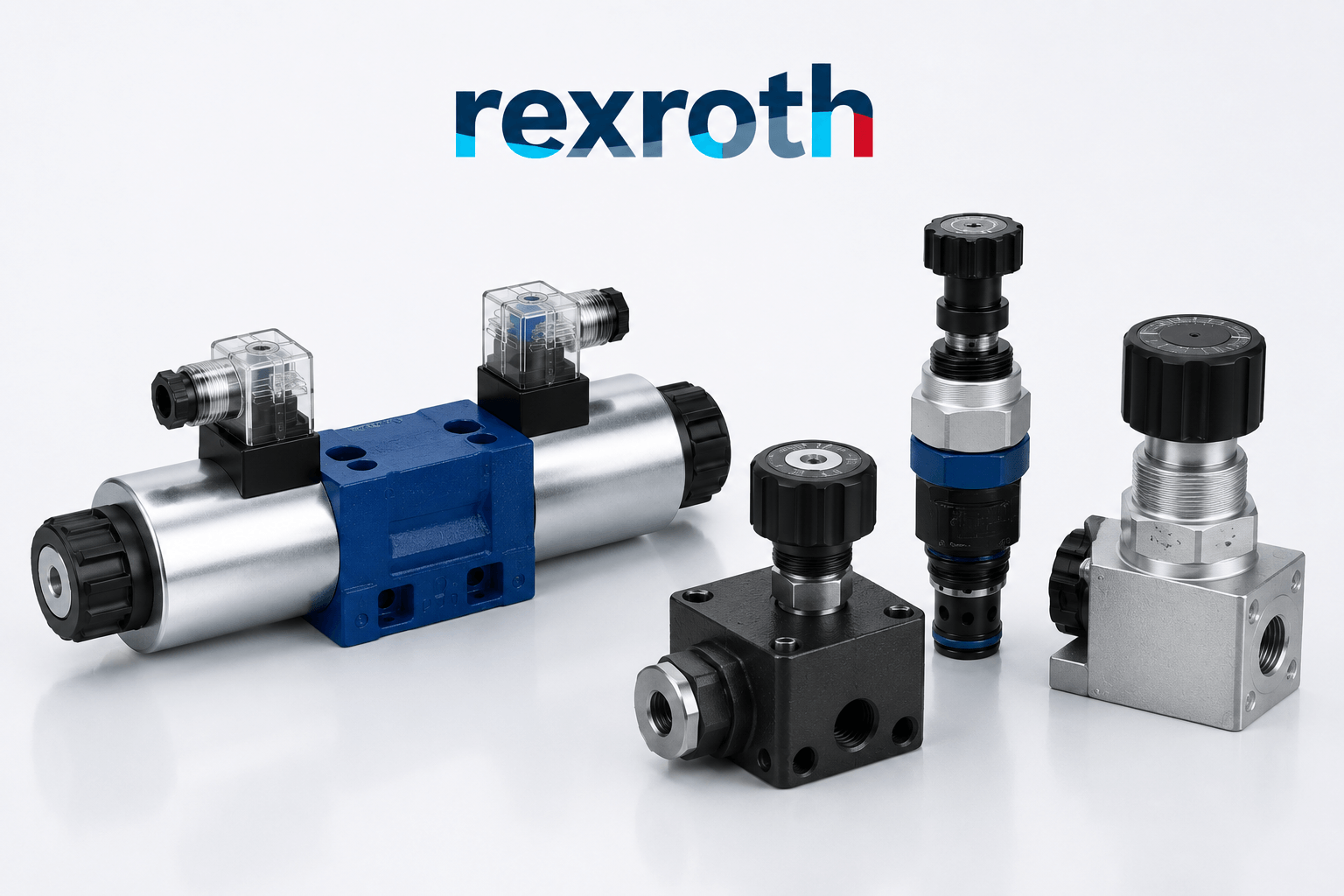
On/Off, Directional and Control Valves
Depending on their role within the system, valves can be used for starting and stopping flow, changing direction, limiting pressure or regulating flow.
Correct circuit analysis makes it possible to determine how each valve influences the operating sequence and the overall behaviour of the system.
The configuration must be selected according to flow, pressure, application dynamics and the required level of control.
Proportional Valves and Electronic Control
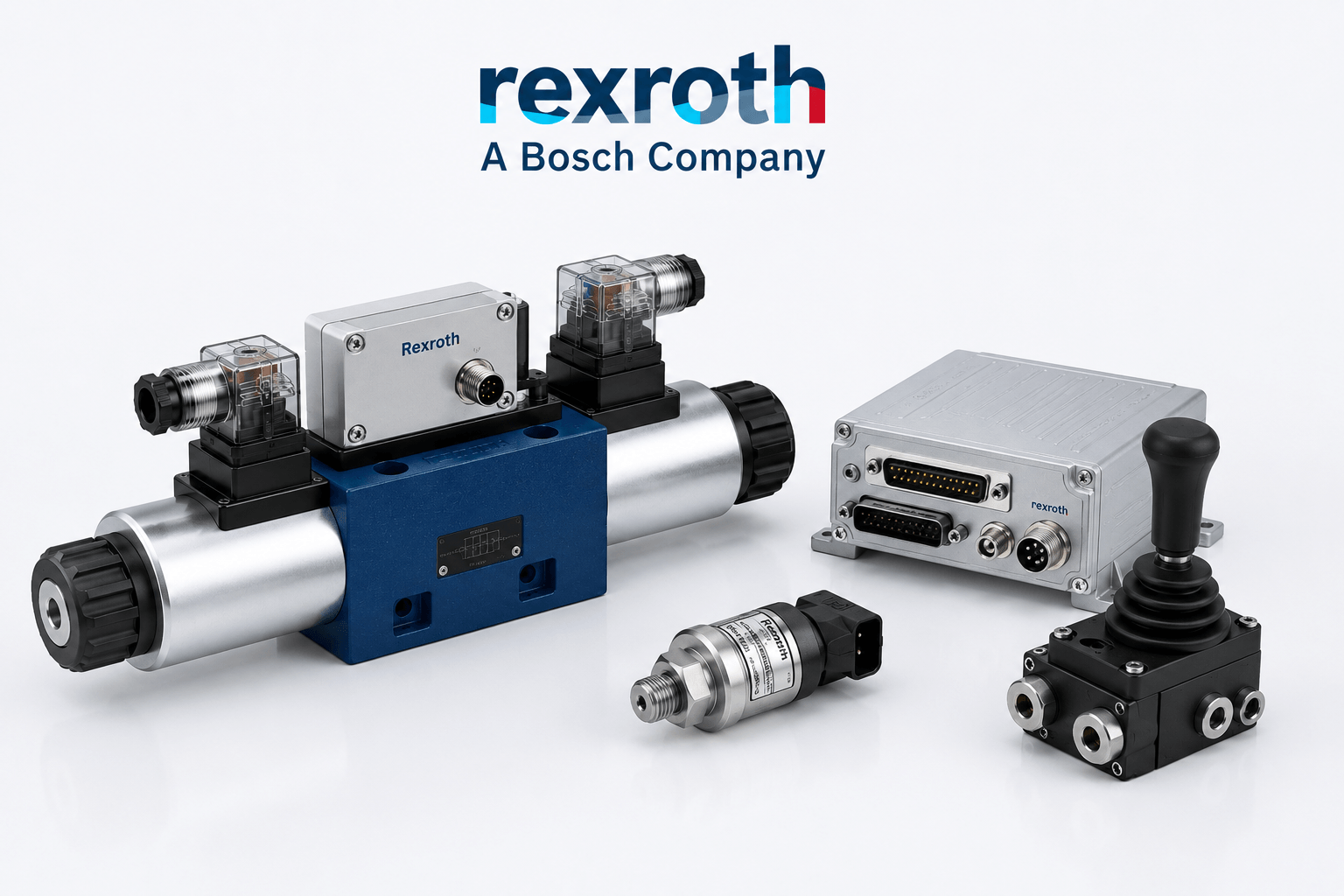
When an application requires finer control than a simple on/off command, proportional valves can be used for continuous regulation of direction, pressure or flow.
These components can be integrated with analogue or digital control systems to create precise and repeatable hydraulic sequences.
Depending on the application, the solution can be extended to more advanced control technologies, including applications with servo valves.
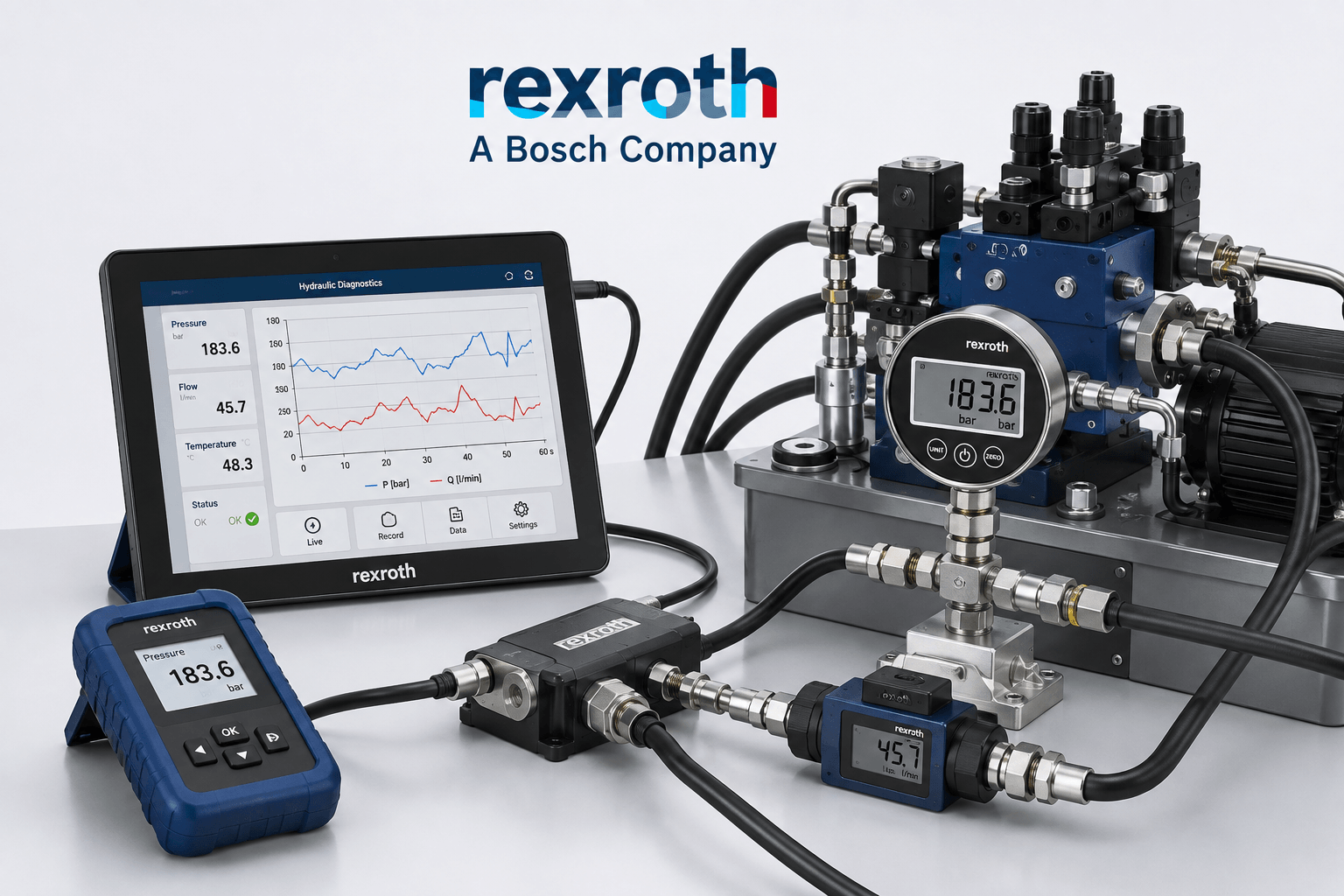
Diagnostics starts with measuring actual operating parameters
For an accurate assessment of a hydraulic system, pressure, flow and electrical values can be measured at different points in the circuit.
Analysing measured values and measurement curves makes it possible to identify operating deviations, compare system behaviour with expected values and locate the causes of a fault more efficiently.
Identifying the causes, not just the symptoms
A hydraulic fault can have several causes: incorrect settings, pressure losses, insufficient flow, improper valve behaviour or pump-related problems.
By correlating the hydraulic circuit diagram with measurements taken directly on the system, critical areas can be analysed in a structured manner.
The objective is to identify the probable cause and determine the correct intervention, avoiding unnecessary replacement of components.
From the circuit diagram to actual system operation
The circuit and component functions are analysed.
Pumps, valves, actuators and control elements are identified.
Pressure, flow and other relevant parameters are verified.
The results are correlated with the actual behaviour of the system.
The required adjustments, interventions or modifications are determined.
A hydraulic application designed as a complete system
Better Control
Pressure, flow and actuation sequences are configured according to process requirements.
Faster Diagnostics
Measurements and circuit analysis facilitate the identification of possible fault causes.
Reliability
Correct configuration and monitoring help reduce unnecessary stress on components.
Integration
The hydraulic system is analysed and configured as part of the complete industrial installation.
The hydraulic solution must be tailored to the application
From reading the circuit diagram and selecting components to adjustments, measurements and diagnostics, CreatX Technology approaches each hydraulic application based on the actual operation of the machine. The objective is to develop a stable, controllable system that can be efficiently analysed during operation.
Our Industrial Hydraulics Experts
CreatX hydraulic applications are developed and analysed by specialists with experience in industrial hydraulics, automation, diagnostics and system integration into production processes.
Dan Poplacenel
Specialist in industrial hydraulic applications, circuit diagram analysis, component configuration, pressure and flow control, diagnostics and optimisation of hydraulic system operation.
Sergiu-Dorin Sarlea
Industrial automation specialist with experience in hydraulic system integration, control, sensors, monitoring and connecting hydraulic applications with machine automation systems.
Do you have a hydraulic application you want to develop or optimise?
The CreatX team can analyse the circuit diagram, components, parameters and system behaviour to configure a solution tailored to your industrial process.
From pumps and valves to control, measurement, diagnostics and integration, we develop the application around the machine and its actual operating requirements.
Talk to the CreatX Team