
.png)
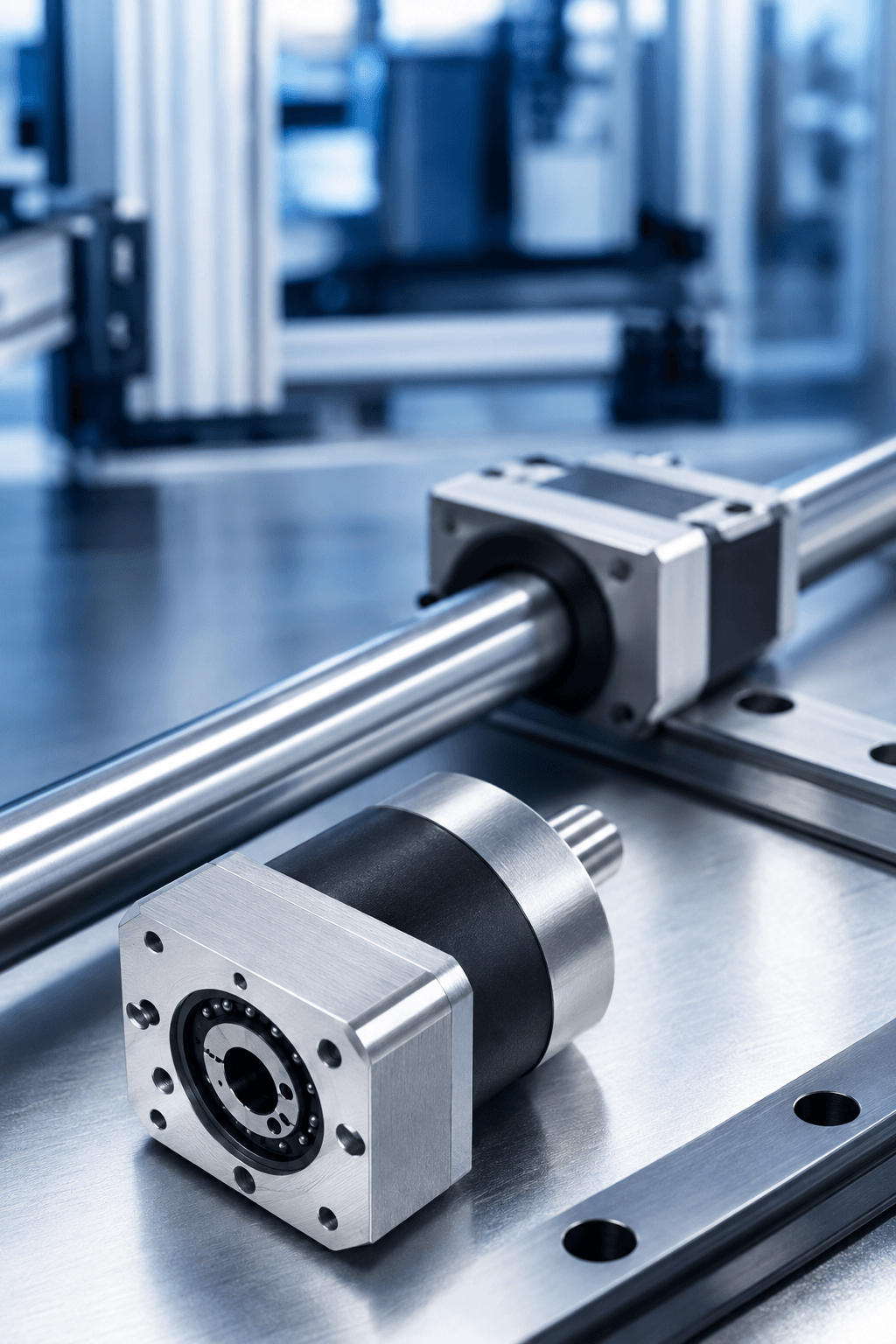
Linear bearings
Linear Bearings – Types, Applications and Solutions for Precise Motion
Linear bearings are essential components in numerous industrial systems where controlled, precise and repeatable motion along a linear direction is required.
They are used in industrial machinery and equipment, automation systems, production machinery, handling equipment and many other applications where movement must be achieved with low friction and a high level of precision.
Unlike conventional bearings, which are mainly designed for rotational motion, linear bearings are designed to guide a component along an axis or precision shaft.
Why Are Linear Bearings Important?
In a linear motion system, the precision of the guidance system can directly influence the performance of the entire equipment. An unsuitable selection may lead to excessive play, premature wear, vibration or loss of precision.
For this reason, the correct selection of linear bearings should be based on load, speed, required precision, operating conditions and the overall system configuration.
Depending on the design and application requirements, linear bearings can be used together with precision shafts, linear axes and other components specific to linear guidance systems.
In modern industrial applications, these components help achieve smooth, stable and efficient motion and are used in both relatively simple equipment and complex automation systems.
In this guide, we will explain what linear bearings are, how they work, the main types available, where they are used in industry and the most important criteria for selecting the right solution for an application.
1. What Are Linear Bearings and How Do They Work?
Linear bearings are mechanical components designed to enable the controlled movement of an element along a linear direction. Their main role is to support and guide motion while reducing friction between moving components.
They are frequently used together with precision shafts, forming guidance systems capable of providing smooth and repeatable movement. Depending on the design and application, the system can support different loads and operating speeds.
Operating Principle
Many linear bearings use rolling elements that circulate between the bearing body and the guide shaft. This principle replaces sliding contact with rolling contact, helping to reduce friction and provide smooth, uniform movement.
As the bearing moves along the shaft, the rolling elements carry the load and facilitate linear motion. In recirculating designs, these elements continuously circulate inside the bearing, allowing longer travel distances without the movement being limited by the travel of the rolling elements themselves.
What Does a Linear Bearing System Consist Of?
A linear guidance system based on linear bearings can consist of several components working together to ensure the correct movement of the assembly.
Why Are Linear Bearings Used?
In an industrial application, simply creating movement is not enough. Motion must be controlled and repeatable, while the components of the system must withstand the forces and operating conditions encountered during use.
Using linear bearings that are properly selected for the application can provide several important advantages:
- reduced friction during movement;
- precise and smooth linear motion;
- good motion repeatability;
- the possibility of achieving high travel speeds, depending on the configuration;
- support for loads specific to the application;
- integration into compact guidance and automation systems;
- reduced wear when the system is correctly sized, installed and lubricated.
Linear Bearings vs. Conventional Bearings
The main difference lies in the type of motion for which they are designed. Conventional bearings are primarily used to support shafts performing rotational movements, while linear bearings are designed for straight-line motion.
| Characteristic | Linear Bearings | Conventional Bearings |
|---|---|---|
| Type of motion | Linear | Primarily rotational |
| Main role | Guiding movement along a linear direction | Supporting and guiding rotating components |
| Associated component | Shaft or linear guidance system | Rotating shaft |
| Applications | Automation, machinery and positioning systems | Motors, gearboxes and rotating mechanisms |
In short: linear bearings are important components of linear motion systems, enabling controlled movement along a shaft or axis. Choosing the right design depends on the characteristics of the application, while differences between available bearing types can influence precision, load capacity and the overall performance of the system.
2. Types of Linear Bearings and Their Characteristics
There are several types of linear bearings, each designed for specific operating conditions and application requirements. Differences may occur in terms of design, load capacity, precision, rigidity or the way the bearing is integrated into the linear guidance system.
The right solution should be selected according to the characteristics of the equipment. An application requiring fast and repetitive movements may have different requirements from a system designed to support higher loads or operate in demanding industrial environments.
Why Are There Different Types of Linear Bearings?
There is no single configuration suitable for every application. Load, speed, precision, available installation space and operating conditions all influence the selection of the linear system and its components.
Linear Ball Bearings
Linear ball bearings are one of the solutions used to achieve linear motion on precision shafts. The balls positioned between the bearing and the shaft help reduce friction and allow smooth and uniform movement.
In many designs, the balls recirculate through the inside of the bearing. This system allows continuous movement along the shaft and makes it possible to achieve travel lengths adapted to the dimensions and requirements of the equipment.
- low friction during movement;
- smooth linear motion;
- possibility of achieving long travel distances;
- relatively simple integration into different mechanical systems;
- suitable for a wide range of industrial applications.
Closed Linear Bearings
Closed linear bearings feature a design that surrounds the guide shaft. This type of configuration can be used when the shaft is supported at its ends and sufficient installation space is available for the assembly.
They are commonly used in guidance systems where a compact design and controlled movement along the shaft are required.
Open Linear Bearings
Open linear bearings feature an opening in the bearing body, allowing them to be used together with shafts that are supported along their length.
This configuration can be particularly important for longer travel distances. Supporting the shaft along its length can help limit deflection when the system is subjected to loads.
| Type | Main Characteristic | Typical Use |
|---|---|---|
| Ball Bearings | Low-friction motion using rolling elements | Linear motion systems and automation |
| Closed Bearings | The bearing body surrounds the shaft | Applications with shafts supported at their ends |
| Open Bearings | Open design for use with supported shafts | Applications with shafts supported along their length and longer travel distances |
Linear Bearings with Housings
In certain applications, the linear bearing can be integrated into a ready-to-install housing. This configuration simplifies the integration of the component into the equipment structure and can reduce the number of operations required to assemble the system.
The housing should be selected together with the appropriate bearing and shaft so that all components of the system operate correctly as a complete assembly.
Choosing the Right Type Is Important for the Entire System
The bearing type should not be selected in isolation. The linear bearing, shaft, housing and other components of the guidance system should be considered as a complete assembly, because the characteristics of each element can influence the overall performance of the system.
Correct sizing can help achieve the required precision, maintain motion stability and increase the operating life of the components.
In short: different linear bearing configurations are available, and the correct choice depends on how the system will operate. Load, travel length, precision, speed and shaft support are just some of the factors that should be analyzed before selecting the appropriate solution.
3. Where Are Linear Bearings Used?
Thanks to their ability to provide precise and controlled movement, linear bearings are used in a wide range of industrial machines, installations and equipment. They can be integrated wherever a component needs to be guided along a linear direction, from relatively simple mechanisms to complex automation systems.
The specific application determines the configuration of the system. Travel length, transported load, speed, precision and the number of operating cycles are factors that can influence the selection of the bearings and other components of the linear motion system.
The Role of Linear Bearings in Industry
Whenever a component needs to move repeatedly between two or more positions, a system capable of guiding the motion and maintaining movement stability is required. Linear bearings are one of the solutions used to achieve these movements.
Industrial Automation
In industrial automation, linear motion is required in numerous processes. Equipment must move, position or transfer components between different points of a production line.
Linear bearings can be used in positioning systems, handling units, feeding mechanisms and other automated equipment where movement needs to be performed repeatedly and in a controlled manner.
Industrial Machines and Equipment
Many industrial machines contain axes or assemblies that perform linear movements. In these applications, the guidance system must allow the component to move while also helping maintain its correct position.
Depending on the configuration, linear bearings and precision shafts can form a compact solution for guiding these movements.
Production Lines and Assembly Systems
On a production line, components can pass through numerous consecutive operations. Feeding, positioning, assembly or transfer processes may require linear movements that are performed hundreds or even thousands of times during equipment operation.
In these situations, guidance systems must be sized by considering not only the maximum load but also the cycle frequency, travel speed and expected operating life.
Pick & Place Systems
Pick & Place applications involve picking up a component from one position and moving it to another point in the process. Such movements are frequently encountered in automated production and assembly processes.
Linear motion systems can help guide the axes along which the handling mechanism moves. Depending on the application, one or more axes may be required to achieve the desired movement path.
Examples of Applications
- handling and transfer equipment;
- Pick & Place systems;
- packaging machines;
- assembly equipment;
- parts feeding systems;
- positioning tables and mechanisms;
- industrial machines and production equipment;
- automated equipment with linear axes.
Packaging and Handling Equipment
The packaging industry is another example where numerous repetitive movements are required. Products need to be positioned, pushed, lifted, transferred or directed between different stages of the process.
Depending on the machine design, linear bearings can be part of the mechanisms responsible for guiding these movements, contributing to the controlled operation of the entire assembly.
Applications Requiring Repetitive Motion
An important advantage of linear motion systems is their ability to perform the same movement repeatedly. This is particularly important in automated processes, where equipment may perform a very large number of operating cycles.
In such applications, selecting the correct linear bearings, ensuring proper lubrication and correctly installing the system are particularly important for maintaining long-term performance.
| Application | Role of Linear Motion |
|---|---|
| Industrial Automation | Controlled positioning and movement of components |
| Assembly Lines | Transferring and positioning parts between operations |
| Pick & Place | Picking up and moving parts between positions |
| Packaging Machines | Guiding mechanisms used for product handling |
| Industrial Machinery | Guiding moving axes and assemblies |
In short: linear bearings can be used in a wide variety of industrial applications, from simple guidance systems to complex automated equipment. The appropriate solution should be selected according to the required motion, load, precision, speed and number of operating cycles the system must perform.
4. How to Choose the Right Linear Bearings for an Application
Choosing the right linear bearings should not be based solely on the available dimensions. The performance of the system depends on how the bearing, shaft and other guidance components respond to the actual requirements of the application.
Load, travel speed, required precision, stroke length and operating environment are just some of the factors that need to be considered. Correct sizing contributes to stable system operation and helps achieve an appropriate service life.
Selection Starts with the Application
Before selecting a linear bearing, the actual operating conditions must be defined: what load needs to be supported or moved, over what distance, at what speed, how precise the movement needs to be and in what environment the system will operate.
1. Load Capacity
One of the first criteria to consider is the load acting on the system. It should not be evaluated only as a total value; the direction of the forces and how they are distributed across the bearings must also be taken into account.
In dynamic applications, forces generated during acceleration, deceleration or changes in direction should also be considered. Incorrect sizing can lead to accelerated wear and a reduced operating life.
2. Motion Precision and Repeatability
Not every application requires the same level of precision. A simple transfer mechanism may have very different requirements compared with an automated positioning system.
When a process requires a component to repeatedly return to the same position, the repeatability of the system must also be considered. Bearings, shafts, mounting tolerances and structural rigidity can all influence the final performance of the assembly.
3. Speed, Acceleration and Operating Cycles
In automated equipment, a linear bearing may perform a large number of movements within a relatively short period of time. For this reason, the maximum speed, acceleration and cycle frequency should be known before selecting the components.
An application that performs only a few occasional movements has different requirements from a production line operating across multiple shifts and continuously repeating the same motion.
4. Travel Length and Shaft Support
Travel length is another important selection criterion. In applications using longer shafts, shaft deflection under load must be taken into consideration.
For certain applications, it may be necessary to use a shaft supported along its length together with open linear bearings. The system configuration should be determined according to travel length, load and the required rigidity.
| Criterion | What Should Be Analyzed? | Why Is It Important? |
|---|---|---|
| Load | Magnitude, direction and distribution | Influences sizing and operating life |
| Precision | Guidance and positioning requirements | Influences application performance |
| Speed | Maximum speed, acceleration and cycles | Determines the dynamic loads on the system |
| Travel Length | Total movement distance | May influence system configuration and shaft support |
| Operating Environment | Dust, contaminants, temperature and humidity | May influence protection and maintenance requirements |
5. Operating Environment
The environment in which the system operates should not be overlooked. Industrial environments may contain dust, particles, humidity or other contaminants that can reach the contact area between the bearing and the shaft.
In these situations, available protection, sealing and lubrication solutions should be considered. Keeping the rolling surfaces in appropriate condition is important for reliable long-term operation.
6. Lubrication and Maintenance
Lubrication plays an important role in the operation of linear bearings. It helps reduce wear and protects the surfaces that come into contact during movement.
Lubrication intervals and lubricant type should be determined according to the characteristics of the component and the operating conditions of the application. Speed, load, temperature, contamination and operating time can all influence maintenance requirements.
Important
A high-performance linear bearing cannot compensate for an incorrectly sized or installed system. The shaft, bearing, housing, alignment, lubrication and supporting structure must be considered together to achieve the correct solution.
7. System Installation and Alignment
Even when the components have been selected correctly, installation can significantly influence system performance. Incorrect alignment can introduce additional loads and affect the smoothness and uniformity of movement.
For this reason, the tolerances and installation instructions specified for the selected components should be followed. In applications with multiple shafts or several guidance points, correct alignment becomes even more important.
In short: choosing the right linear bearings requires an analysis of the entire application. Load, precision, speed, travel length, operating environment, lubrication and installation should all be evaluated together. Correct component selection contributes to stable and precise motion adapted to the requirements of the industrial equipment.
5. Bosch Rexroth Linear Bearings and CreatX Technology Solutions
For industrial applications where linear motion must be performed with precision and efficiency, selecting the right components is essential. Bosch Rexroth linear bearings are part of a comprehensive range of linear motion technology solutions and can be integrated into various machine, equipment and industrial automation configurations.
A linear motion solution should not be considered solely in terms of the bearing itself. To achieve the required performance, the entire assembly must be analyzed: the linear bearing, shaft, housing, support system, applied loads and actual operating conditions.
Linear Motion Technology for Industrial Applications
Bosch Rexroth linear motion technology solutions allow systems to be configured according to the specific requirements of each application. Component selection should take into account load, precision, speed, travel length, mounting configuration and operating conditions.
The Linear Bearing Is Part of a Complete System
In practice, the performance of an application is not determined exclusively by the bearing. The shaft along which it moves, the support configuration and the mounting method all influence the behavior of the complete system.
For this reason, the selection of linear bearings should be carried out together with the other components required for guidance. Dimensional and technical compatibility between the individual elements is important for achieving stable and reliable motion.
How Can the Right Solution Be Identified?
Before selecting the components, it is recommended to define the main parameters of the application. The more accurately these requirements are established, the easier it becomes to identify a suitable configuration.
Useful Information for Selecting Linear Bearings
- the load that must be supported or moved;
- the direction and distribution of forces;
- the required travel length;
- the required speed and acceleration;
- the desired precision and repeatability;
- the estimated number of operating cycles;
- the available installation space;
- the operating environment;
- lubrication and maintenance requirements.
CreatX Technology Solutions for Linear Motion Technology
CreatX Technology provides Bosch Rexroth solutions and components for industrial applications, including projects that require linear motion and guidance systems.
Based on the technical requirements of the application, suitable components can be identified so that the selected configuration meets the operating parameters of the equipment.
This approach is particularly important when the system must be integrated into existing machinery or when a new application is being developed, as component selection must be correlated with the requirements of the complete assembly.
Why Is Technical Selection Important?
Two applications that appear similar may have very different technical requirements. Differences in load, speed, travel length or operating environment may lead to the selection of different components.
For this reason, a linear motion system should be selected according to the technical parameters of the application, rather than only by the dimensions or appearance of the existing component.
New Applications or Replacement of Existing Components
The need for a linear bearing may arise both during the design of new equipment and when an existing component needs to be replaced.
For replacement applications, identifying the existing product code and the technical characteristics of the system can simplify the selection process. For new projects, sizing starts from the application parameters and the performance requirements that the system must meet.
| Situation | Useful Information | Objective |
|---|---|---|
| Component Replacement | Product code, dimensions and existing configuration | Identify a compatible component |
| New Application | Load, travel, speed, precision and operating environment | Correct sizing of the linear motion system |
| Machine Modernization | Current system data and required performance | Adapt the solution to the new requirements |
In short: Bosch Rexroth linear bearings can be part of complete linear motion systems, and selecting the right component should be based on the technical requirements of the application. CreatX Technology can support the identification and selection of suitable Bosch Rexroth solutions for industrial equipment and applications.
Conclusion
Linear bearings are important components for achieving precise and controlled motion in a wide range of industrial machines, equipment and automation systems. By reducing friction and providing accurate guidance for moving components, they contribute to the efficient operation of linear motion systems.
Choosing the right solution requires several parameters to be considered, including load, speed, precision, travel length, number of operating cycles, environmental conditions and mounting configuration. At the same time, the bearing should not be considered as an isolated component, but together with the shaft, housing and other elements of the linear motion system.
For industrial applications that require precision and reliable operation, Bosch Rexroth linear bearings can be integrated into configurations designed according to the specific technical requirements of the equipment.
Correct sizing and the selection of compatible components contribute to stable motion, reduced wear and reliable long-term operation of the complete system.
Looking for Linear Bearings for Your Application?
CreatX Technology can support you in identifying and selecting the right Bosch Rexroth components for your application. Send us the product code of the existing component or the technical parameters of your application, and our team can help you identify the appropriate solution.
Request a QuoteRelated posts
-
 Bosch Rexroth Linear Guides
Learn what a linear guide is, how it works and the advantages of using Bosch Rexroth linear guides in industrial...Read more
Bosch Rexroth Linear Guides
Learn what a linear guide is, how it works and the advantages of using Bosch Rexroth linear guides in industrial...Read more
Leave a comment