
.png)
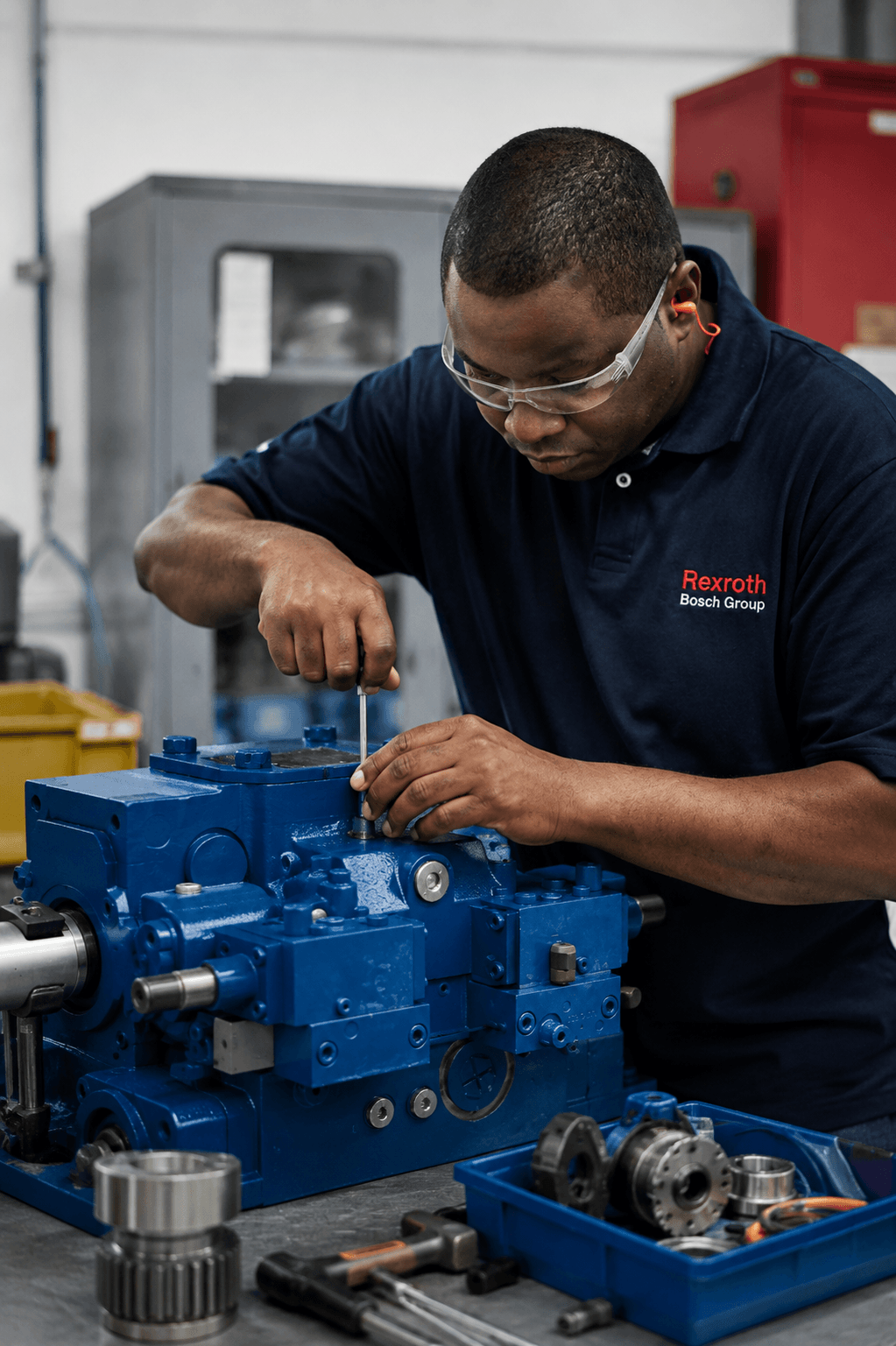
Hydraulic pump repairs
Hydraulic Pump Repair – Diagnostics, Service and Reconditioning
Hydraulic pump repair is an essential part of maintaining the performance and availability of industrial machinery and hydraulic systems. A hydraulic pump that is damaged or operating outside its normal parameters can affect the performance of the entire system and may lead to unplanned equipment downtime.
A drop in pressure, reduced flow, unusual noise, vibration, excessive operating temperature or oil leakage may indicate a problem with the pump or another component of the hydraulic circuit. Correctly identifying the cause is essential before replacing or repairing any components.
For this reason, a professional hydraulic pump repair process involves much more than simply replacing worn parts. It should begin with equipment diagnostics and identification of the root cause of the failure, followed by component inspection, repair or replacement, reassembly and final testing of the pump.
Why Is Correct Diagnosis So Important?
A hydraulic pump failure may be either the cause of a system problem or the result of another fault elsewhere in the installation. Oil contamination, inadequate filtration, cavitation, excessive temperature or incorrect operating conditions can all contribute to premature wear.
For this reason, before carrying out a hydraulic pump repair, it is important to identify and analyse the cause of the failure rather than simply correcting its visible effects.
For Bosch Rexroth equipment, accurate identification of the pump and its configuration is particularly important. The complete product code, series, operating parameters and information about the application can help identify the correct components and determine the most appropriate technical solution.
In this guide, we examine the main signs of hydraulic pump failure, the most common causes of damage, the stages of the diagnostic and repair process, and the key criteria to consider when choosing between repairing, reconditioning or replacing a hydraulic pump.
Table of Contents
- What Does Hydraulic Pump Repair Involve and When Is It Necessary?
- The Most Common Hydraulic Pump Failures
- Stages of the Hydraulic Pump Diagnostic and Repair Process
- Repair, Reconditioning or Replacement – How to Choose the Right Solution?
- Bosch Rexroth Hydraulic Pump Repair and Services Provided by CreatX Technology
1. What Does Hydraulic Pump Repair Involve and When Is It Necessary?
The hydraulic pump is one of the essential components of a hydraulic system. Its role is to convert the mechanical energy supplied by the drive motor into hydraulic energy by generating the flow required for the system to operate. Pressure develops within the circuit as a result of the resistance encountered by this flow.
When a pump begins to experience wear or internal damage, the performance of the entire hydraulic system can be affected. Equipment may operate more slowly, fail to reach the required operating parameters, or develop unusual noise, vibration and excessive operating temperatures.
A professional hydraulic pump repair process aims to identify the cause of the failure, assess the condition of the internal components and restore the equipment to appropriate operating conditions whenever this is technically and economically justified.
Repair Starts with Diagnosis, Not Parts Replacement
Immediately replacing a damaged component without identifying the underlying cause may lead to the same failure occurring again. Fluid contamination, cavitation, air entering the circuit, excessive temperatures or operation outside the recommended parameters can damage the pump again even after the repair has been completed.
What Is the Role of a Pump in a Hydraulic System?
The pump ensures the circulation of hydraulic fluid throughout the system. The generated flow is used to supply actuators, hydraulic motors and other components responsible for producing the movements and functions required by the machinery.
For this reason, a problem with the pump can affect the entire hydraulic system. A reduction in available flow may decrease actuator speed, while excessive internal wear can affect system efficiency and its behaviour under load.
Reduced Flow
Internal wear can increase volumetric losses and reduce the effective flow available for the hydraulic system.
Unusual Noise
Cavitation, air in the circuit, supply problems or damage to internal components can significantly change the sound produced by the pump.
Higher Temperature
Internal losses, improper operating conditions or other problems within the hydraulic circuit can contribute to increased fluid temperature.
What Are the Signs of a Failing Hydraulic Pump?
Hydraulic pump failure does not always result in the immediate and complete shutdown of the equipment. In many cases, deterioration develops gradually and the hydraulic system begins to show warning signs that indicate the need for technical inspection.
Identifying these symptoms at an early stage can make it possible to intervene before the damage becomes more severe or affects other components within the hydraulic system.
- reduced hydraulic system performance;
- insufficient flow or unstable actuator operation;
- unusual noises coming from the pump area;
- excessive vibration;
- increased operating temperature;
- external hydraulic fluid leakage;
- irregular operation or fluctuations in system performance;
- accelerated wear or contamination detected in the hydraulic fluid.
Does a Pressure Drop Always Mean the Hydraulic Pump Is Faulty?
No. This is one of the most important distinctions to make during the diagnostic process. A hydraulic system that can no longer reach the required pressure does not automatically indicate a faulty pump.
The problem may also originate from valves, internal leakage within actuators, incorrect settings, contamination, piping or other components in the circuit. For this reason, hydraulic pump diagnostics should be carried out within the context of the entire hydraulic system.
Important
The pump generates flow, while pressure develops as a result of the resistance encountered by the hydraulic fluid within the circuit. Therefore, a pressure-related problem should be investigated across the entire system before concluding that the pump needs to be repaired or replaced.
When Is Hydraulic Pump Repair Recommended?
Repair should be considered when measurements and diagnostics indicate damage or wear that affects pump performance. Depending on the pump design and the severity of the failure, the intervention may involve replacing specific components, reconditioning suitable parts or carrying out a more extensive repair.
For high-value industrial hydraulic pumps, repair can provide an effective alternative to purchasing a new unit, provided that the condition of the components and the availability of suitable parts allow the pump to be restored to appropriate operating parameters.
However, the decision should always follow a technical inspection. Not every hydraulic pump can or should be repaired, and in some cases replacement may be the safer and more economically efficient solution.
Why Is Identifying the Root Cause of the Failure Important?
One of the most important stages of a professional hydraulic pump repair service is determining why the equipment failed. If only the consequence of the problem is repaired without eliminating its cause, there is a risk that the same failure will occur again after the pump is reinstalled.
For example, severe fluid contamination can damage the internal components and working surfaces of a hydraulic pump. In this situation, repairing the pump without checking the filtration system, cleaning the hydraulic circuit and assessing the condition of the fluid may result in premature damage to the repaired unit.
| Symptom | Possible Cause | What Should Be Checked? |
|---|---|---|
| Reduced performance | Internal wear or leakage within the circuit | Flow, pressure and internal leakage |
| Excessive noise | Cavitation, air or internal damage | Pump inlet conditions, hydraulic fluid and internal components |
| High temperature | Energy losses or improper operation | Pump, hydraulic circuit and cooling system |
| Oil leakage | Damaged seals or other faults | Seals, housing and connections |
When Should a Hydraulic Pump Be Inspected?
A technical inspection is recommended whenever noticeable changes occur in the behaviour of the hydraulic system, including:
- reduced machine performance;
- unusual noise or vibration;
- higher-than-normal operating temperatures;
- hydraulic fluid leakage;
- unstable operation;
- changes in flow or system behaviour under load.
Diagnostics carried out before a major failure occurs can help identify the root cause and determine the most appropriate solution: hydraulic pump repair, reconditioning or replacement.
2. The Most Common Hydraulic Pump Failures
Hydraulic pump failures can have many different causes, ranging from normal component wear to fluid contamination, cavitation, excessive temperatures or operation under unsuitable conditions. Correctly identifying the cause is essential when determining the appropriate hydraulic pump repair procedure.
In an industrial hydraulic system, similar symptoms can have completely different causes. For example, excessive noise may result from cavitation, air in the hydraulic fluid or damage to internal components. For this reason, proper diagnostics should be carried out before the pump is disassembled and repaired.
Pump Failure Can Be the Result of Another Problem
A damaged hydraulic pump is not always the original cause of a system shutdown. Filtration problems, oil contamination, inadequate inlet conditions or operation outside the recommended parameters can all contribute to pump damage. If these causes are not eliminated, the failure may occur again even after the pump has been repaired.
Hydraulic Fluid Contamination
Contamination is one of the factors that can accelerate wear within a hydraulic system. Solid particles, water or other contaminants present in the hydraulic fluid can damage working surfaces and affect the precise internal clearances of the pump.
Over time, contamination can contribute to abrasive wear, surface damage and increased internal leakage. As a result, volumetric efficiency may decrease and the overall performance of the hydraulic pump can be reduced.
In such cases, simply carrying out hydraulic pump reconditioning may not be sufficient. The source of contamination, the condition of the filters and, where necessary, the cleanliness of the entire hydraulic circuit should also be checked.
Cavitation
Cavitation can occur when the inlet conditions of the pump do not allow the required pressure to be maintained, promoting the formation and subsequent collapse of vapour bubbles within the hydraulic fluid.
This phenomenon can generate characteristic noise and may gradually damage internal working surfaces. Prolonged operation under cavitating conditions can also significantly reduce the service life of the hydraulic pump.
Noise
Unusual noise coming from the pump area may indicate inlet problems, cavitation, air in the hydraulic fluid or internal damage.
Vibration
Changes in vibration levels may indicate improper pump operation or problems associated with the drive system and hydraulic installation.
Wear
Extended operation under cavitating conditions can contribute to damage and accelerated wear of the pump's internal components.
Air in the Hydraulic System
The presence of air in hydraulic fluid can affect the normal operation of the system. Air may enter the circuit through leaking connections, problems on the suction line or other areas of the hydraulic installation.
Possible symptoms include unusual noise, irregular operation and changes in actuator behaviour. Because these symptoms can be confused with those caused by other faults, the hydraulic circuit should be inspected before reaching a final diagnosis.
Internal Component Wear
Hydraulic pumps contain components manufactured to precise tolerances. As these components wear, internal clearances can change and internal leakage can increase.
This can result in a reduction in the effective flow supplied to the system and lower pump efficiency. Depending on the pump design, wear can affect different internal components, and assessing their condition may require disassembly and detailed inspection.
During a professional hydraulic pump service, the internal components are evaluated to determine whether they can be reused, reconditioned or need to be replaced.
Excessive Hydraulic Fluid Temperature
Operating temperature influences both the properties of the hydraulic fluid and the behaviour of the system components. Operation at unsuitable temperatures can affect fluid viscosity and accelerate the degradation of the oil and sealing elements.
Overheating should not automatically be attributed to the hydraulic pump. The cause may be related to internal leakage, insufficient cooling, incorrect system settings or other problems within the hydraulic circuit.
High Temperature Is a Symptom, Not a Diagnosis
If the hydraulic oil becomes excessively hot, the entire system should be analysed. Replacing or repairing the pump without identifying the source of the energy losses may not solve the underlying problem.
Lubrication Problems and Incorrect Hydraulic Fluid
Hydraulic fluid not only transmits energy but also plays an important role in lubricating and protecting system components. Selecting the correct fluid and maintaining it in suitable condition are therefore essential for reliable pump operation.
A hydraulic fluid with properties that are unsuitable for the operating conditions can contribute to increased wear, internal losses or excessive temperature. For this reason, diagnostics should take into account both the condition of the fluid and the technical requirements of the equipment.
Damaged Seals and Oil Leakage
External hydraulic fluid leakage is one of the easiest symptoms to identify. Leakage may occur around seals, connections or other areas of the hydraulic pump.
Replacing a seal may solve the problem when the seal itself is the only damaged component. However, if seal damage was caused by excessive temperature, unsuitable pressure conditions, mechanical wear or another system problem, the original cause should also be identified and corrected.
Operating the Pump Outside Its Recommended Parameters
Every hydraulic pump is designed to operate within specific conditions. Speed, pressure, temperature, hydraulic fluid type and inlet conditions must comply with the technical requirements of the equipment.
Repeated or prolonged operation outside the permissible limits can accelerate wear and lead to premature failure. Therefore, when a hydraulic pump is sent for repair, information about the conditions under which it operated before the failure can be valuable during the diagnostic process.
| Problem | Possible Effect | What Should Be Analysed? |
|---|---|---|
| Fluid contamination | Wear and damage to internal surfaces | Hydraulic fluid, filters and circuit cleanliness |
| Cavitation | Noise and component damage | Inlet conditions and pump supply |
| Internal wear | Internal leakage and reduced flow | Component condition and internal clearances |
| Excessive temperature | Fluid degradation and accelerated wear | Circuit, cooling system, hydraulic fluid and energy losses |
| Damaged seals | External hydraulic fluid leakage | Seals, temperature, pressure and mating surfaces |
| Incorrect operating parameters | Accelerated wear and premature failure | Pressure, speed, temperature and operating conditions |
Why Is Pump Analysis Important Before Repair?
Two hydraulic pumps showing the same symptom do not necessarily have the same fault. This is why a professional hydraulic pump repair process should always begin with diagnostics and technical inspection.
Once the damaged components and the probable cause of failure have been identified, the appropriate solution can be determined: replacing affected components, reconditioning the hydraulic pump or, when repair is no longer technically or economically justified, replacing the unit completely.
A Proper Repair Should Also Address the Cause of Failure
Replacing damaged components is only one part of the process. To reduce the risk of another failure, the operating conditions that contributed to the pump damage should also be identified and corrected.
Especially for Bosch Rexroth hydraulic pumps used in industrial applications, accurate identification of the configuration, proper diagnostics and verification of operating parameters are important steps before determining the appropriate repair solution.
3. Stages of the Hydraulic Pump Diagnostic and Repair Process
A professional hydraulic pump repair process should follow a clearly defined sequence of stages, from equipment identification and initial diagnostics to disassembly, inspection, component replacement or reconditioning, reassembly and final testing.
The objective is not only to restore the hydraulic pump to working condition, but also to identify the cause that led to the failure. In industrial applications, this approach is important for reducing the risk of the same problem occurring again after the equipment has been reinstalled.
The complexity of the repair process depends on the type of pump, its configuration, the degree of wear and the operating conditions. Axial piston pumps, vane pumps and gear pumps have different designs and therefore require inspection and repair procedures adapted to their construction.
From Diagnosis to Final Testing
A proper repair does not begin by immediately disassembling the pump. Information about machine symptoms, the complete equipment code, operating parameters and the conditions under which the failure occurred can provide valuable information during the diagnostic process.
1. Accurate Identification of the Hydraulic Pump
The first stage is the accurate identification of the equipment. The manufacturer, complete product code, series and pump configuration are important for determining the technical characteristics of the unit and identifying the correct components.
This is particularly important for Bosch Rexroth hydraulic pumps, where two units from the same product family may have different configurations depending on displacement, direction of rotation, shaft design, mounting flange, control system or other technical options.
For this reason, the complete code shown on the pump nameplate should be used whenever possible instead of relying only on the general name of the product series.
2. Collecting Information About the Failure
Before disassembly, it is useful to understand the symptoms that led to the inspection or shutdown of the equipment. This information can provide important clues about the source of the problem and help guide the diagnostic process.
- What symptoms appeared before the machine was stopped?
- Was the pump producing unusual noise or vibration?
- Was there a noticeable decrease in system performance?
- Did the hydraulic fluid temperature increase?
- Were any hydraulic fluid leaks observed?
- Did the failure develop gradually or occur suddenly?
- Were any recent interventions carried out on the hydraulic system?
- Is there any information regarding fluid contamination or filter condition?
Identification
The complete product code and pump configuration allow the equipment and its technical characteristics to be accurately identified.
Diagnostics
Symptoms and operating conditions are analysed to identify the possible causes of the hydraulic pump failure.
Inspection
After disassembly, the internal components are inspected to identify wear, damage and parts that require repair or replacement.
3. Controlled Disassembly of the Hydraulic Pump
After the initial evaluation, the pump can be disassembled. This stage provides access to the internal components and allows their condition to be assessed in detail.
Disassembly should be carried out in an appropriate environment because hydraulic components are particularly sensitive to contamination. The position and configuration of individual components should also be carefully monitored so that the pump can later be reassembled according to its correct technical configuration.
4. Cleaning and Inspection of Internal Components
After disassembly, the components are cleaned and inspected for signs of wear or damage. This stage is essential for determining the actual extent of the hydraulic pump repair.
Depending on the type of hydraulic pump, the inspection may include working surfaces, bearings, shafts, sealing elements and other components specific to the design of the equipment.
Wear patterns can also provide valuable information about the cause of the failure. For example, certain types of damage may indicate contamination, operation under unsuitable conditions or lubrication problems.
Inspection Is Not Only About Finding Parts to Replace
The way in which individual components have been damaged can provide important information about the root cause of the failure. This information can help prevent the same problem from occurring after the hydraulic pump has been reinstalled.
5. Component Evaluation and Selection of the Repair Solution
After inspection, it can be determined which components may be reused and which require replacement or, where the technology and permitted tolerances allow, reconditioning.
At this stage, it is also possible to determine whether hydraulic pump repair is technically and economically justified. In the case of extensive damage, the cost and expected reliability of the repair should be compared with the alternative of replacing the equipment.
For hydraulic pumps used in critical industrial applications, component availability, repair time and the impact of machine downtime on the production process should also be taken into consideration.
6. Replacement or Reconditioning of Components
Once the appropriate technical solution has been established, the necessary work can be carried out on the pump components. Parts that no longer meet the required operating conditions are replaced, while components suitable for reconditioning can be processed according to the applicable technical requirements.
The quality of the components used and compliance with the required tolerances are important for the subsequent performance of the pump. Particularly in complex hydraulic equipment, even relatively small deviations can influence internal leakage, efficiency and service life.
7. Reassembly of the Hydraulic Pump
After the required repair work has been completed, the hydraulic pump is reassembled according to its configuration. Seals and other necessary components are installed, and the complete assembly is prepared for inspection and testing.
Cleanliness remains essential during this stage. Introducing contaminants during reassembly can compromise the result of the repair before the hydraulic pump is even reinstalled on the machine.
8. Testing the Hydraulic Pump After Repair
Testing is one of the most important stages of a professional hydraulic pump repair process. The fact that a pump has been reassembled and can operate mechanically does not, by itself, demonstrate that it can provide the performance required by the application.
Depending on the type and configuration of the equipment, testing may include parameters such as flow, behaviour under different operating conditions, leakage, temperature, noise and other characteristics relevant to evaluating pump performance.
Why Is Test Bench Verification Important?
When the pump type and service procedure allow it, controlled test bench verification makes it possible to evaluate the behaviour of the equipment before it is reinstalled in the machine. Potential problems can therefore be identified before the pump returns to the production process.
| Stage | What Does It Involve? | Objective |
|---|---|---|
| Identification | Checking the pump code and configuration | Accurate equipment identification |
| Diagnostics | Analysis of symptoms and operating conditions | Identification of possible causes |
| Disassembly | Controlled disassembly of the pump | Access to internal components |
| Inspection | Cleaning and checking individual components | Determining the degree of wear |
| Repair | Replacement or reconditioning of components | Restoring the assembly to appropriate operating condition |
| Reassembly | Installation of components and seals | Preparing the equipment for verification |
| Testing | Verification of operating parameters | Confirmation of the repair result |
9. Reinstallation and Hydraulic System Verification
The process should not necessarily end when the pump itself has been repaired. Before or during reinstallation, the condition of the hydraulic system in which the pump will operate should also be considered.
If the original failure was caused by contamination, filtration problems, inadequate inlet conditions or other issues within the installation, these problems should be corrected before the repaired pump is returned to service.
Otherwise, the hydraulic pump may suffer premature damage and the same repair process may need to be repeated.
Hydraulic Pump Repair Should Be Treated as a Complete Process
Diagnostics, component inspection, root-cause identification, technical repair and final testing all contribute to the quality and reliability of the completed repair.
For industrial applications and Bosch Rexroth hydraulic pump repair, accurate equipment identification and verification of operating parameters after the intervention are particularly important for achieving a reliable technical solution.
4. Repair, Reconditioning or Replacement – How to Choose the Right Solution?
When a hydraulic pump shows signs of wear or develops a fault, complete replacement of the equipment is not always the only solution. Depending on the condition of the components, the type of pump, parts availability and the importance of the application, three main options can be considered: hydraulic pump repair, reconditioning or replacement.
The right decision should be based on a technical assessment. The cost of the intervention is important, but it should not be considered separately from expected reliability, machine downtime and the risk of another failure occurring after the equipment is returned to service.
In industrial applications, a decision based exclusively on price can lead to additional costs if the pump can no longer be restored to appropriate operating conditions. For this reason, professional hydraulic pump repair services should also include an assessment of the technical and economic feasibility of the intervention.
Not Every Failed Hydraulic Pump Needs to Be Replaced
For certain industrial hydraulic pumps, a properly performed repair or reconditioning process can provide an alternative to purchasing a new unit. However, the decision should be made only after disassembly, inspection and assessment of the actual extent of the damage.
When Can a Hydraulic Pump Be Repaired?
Repair may be considered when the damage is limited to specific components, the main pump assembly remains in a condition that allows continued operation, and the parts required for the intervention are available.
In this situation, the repair may involve replacing damaged components, seals, bearings or other elements specific to the pump design, followed by reassembly and verification.
However, the cause of the damage should be identified before the repair is completed. If the problem was caused by contamination, cavitation or unsuitable operating conditions within the hydraulic system, these issues should also be corrected to reduce the risk of repeated failure.
Repair
Suitable when the fault can be corrected by repairing or replacing the affected components and the main assembly remains suitable for continued operation.
Reconditioning
Involves a more extensive intervention, with individual components inspected and eligible parts restored to appropriate operating condition where technically possible.
Replacement
May be the appropriate solution when damage is extensive, repair is no longer justified or the reliability required by the application cannot be achieved through repair.
What Does Hydraulic Pump Reconditioning Involve?
Hydraulic pump reconditioning generally involves a more extensive intervention than repairing a single fault. The pump is disassembled and inspected, and its components are individually assessed to determine their condition.
Damaged components that can no longer be used are replaced, while components that are technically suitable for reconditioning may undergo the necessary procedures. The pump is then reassembled and its operation verified.
The possibility of reconditioning depends on the pump design and the extent of wear. Not every component can be restored, and certain types of damage may make reconditioning technically or economically unjustified.
When Should a Hydraulic Pump Be Replaced?
There are situations in which replacing the hydraulic pump is the more appropriate technical solution. This may be the case when damage is extensive, critical components can no longer be recovered or the total repair cost approaches the cost of a new replacement unit.
Replacement may also need to be considered when the existing model is no longer available or when an updated technical solution has replaced the original equipment.
In these situations, the compatibility of the replacement pump with the existing hydraulic system must be checked carefully. Important parameters may include displacement, flow requirements, operating speed, pressure, control type, direction of rotation, mechanical interface and hydraulic connections.
A Similar Hydraulic Pump Is Not Automatically Compatible
Two hydraulic pumps from the same product family may have different configurations. This is particularly important for Bosch Rexroth equipment, where the complete product code should be checked before selecting a replacement pump or successor model.
How Do We Determine Whether Hydraulic Pump Repair Is Cost-Effective?
The economic assessment should not be limited to comparing the repair cost with the purchase price of a new hydraulic pump. In an industrial environment, the cost of machine downtime, the delivery time for new equipment and the availability of replacement components should also be considered.
For a critical machine or production line, the time required to restore operation can be just as important as, or even more important than, the difference in cost between repair and replacement.
Therefore, the choice between hydraulic pump repair and replacement should take into account total cost, expected service life, reliability and the impact of equipment downtime on the production process.
| Criterion | Repair / Reconditioning | Replacement |
|---|---|---|
| Extent of damage | The pump assembly can be technically recovered | Major or irreparable damage is present |
| Parts availability | Required components are available | Parts are unavailable or repair is impractical |
| Cost | The intervention is economically justified | Repair cost approaches the cost of replacement |
| Downtime | May reduce equipment downtime in certain situations | Depends on pump availability and delivery time |
| Required reliability | Can be achieved through an appropriate repair process | Preferable when the existing pump cannot be reliably restored |
| Existing model | Can be repaired and maintained in service | May require identification of a compatible replacement or successor |
The Importance of Downtime in Industrial Applications
In an industrial installation, the cost of the hydraulic pump itself represents only part of the financial impact of a failure. The shutdown of a production line or critical machine can generate significant losses for every hour or day that the equipment remains unavailable.
For this reason, when evaluating hydraulic pump service options, the time required to implement each solution should also be considered.
In some cases, repairing the existing hydraulic pump may allow the equipment to return to operation more quickly. In other situations, the immediate availability of a replacement unit may make complete pump replacement the more efficient solution.
What About an Older Bosch Rexroth Hydraulic Pump?
Many industrial systems continue to operate with Bosch Rexroth hydraulic pumps that have been in service for extended periods. When one of these pumps develops a fault, the first step is to accurately identify the complete product code and configuration.
Based on this information, it is possible to evaluate the feasibility of Bosch Rexroth hydraulic pump repair, check the availability of suitable components or investigate a technically compatible replacement solution.
If the original model is no longer available in the same configuration, selecting a successor should not be based solely on the pump family or physical dimensions. The technical characteristics and compatibility with the existing application must also be analysed.
Keep the Complete Pump Product Code
When requesting an assessment for a Bosch Rexroth hydraulic pump, a clear photograph of the identification nameplate can make equipment identification significantly easier.
The complete product code provides much more accurate information than a general description such as “A10VSO pump” or “Rexroth pump” and reduces the risk of identifying an incompatible configuration.
Hydraulic Pump Repair Should Be Considered in the Context of the Entire System
Whether the final decision is to repair, recondition or replace the hydraulic pump, the original cause of the failure should also be investigated. Installing a repaired or new pump into a contaminated hydraulic system or one operating under unsuitable conditions can lead to another failure.
Filtration, hydraulic fluid condition, inlet conditions, operating temperature, system settings and other components within the installation should be checked whenever there are indications that they may have contributed to the damage.
For this reason, hydraulic pump repair should be considered as part of the maintenance and optimisation of the entire hydraulic system rather than as an isolated intervention on a single component.
Should the Hydraulic Pump Be Repaired or Replaced?
The answer depends on the actual condition of the equipment, the repair cost, component availability, downtime and the technical requirements of the application.
Before making a decision, a technical assessment of the hydraulic pump can help determine the most appropriate solution and avoid unnecessarily replacing equipment that can still be repaired or, conversely, investing in a repair that is no longer technically or economically justified.
5. Bosch Rexroth Hydraulic Pump Repair and Services Provided by CreatX Technology
In industrial applications, a hydraulic pump failure can affect the operation of an individual machine or even the availability of an entire production system. For this reason, the intervention should focus not only on repairing the fault, but also on identifying the root cause that led to the failure.
CreatX Technology provides specialised hydraulic pump repair, diagnostics and technical support services for equipment used in industrial applications, with extensive expertise in Bosch Rexroth technology.
Technical experience in industrial hydraulics makes it possible to approach each intervention by considering the equipment configuration, the symptoms identified and the actual operating conditions of the hydraulic system.
Do You Have a Faulty Bosch Rexroth Hydraulic Pump?
For accurate equipment identification, we recommend providing the complete pump product code or a clear photograph of the identification nameplate, together with information about the symptoms you have observed.
Based on this information, the first step in diagnosing and evaluating the equipment can be determined.
Expertise in Bosch Rexroth Hydraulic Pumps
Bosch Rexroth hydraulic pumps are used in a wide range of industrial applications, from production machinery and manufacturing systems to presses, heavy-duty equipment and complex hydraulic installations.
Depending on the application, hydraulic systems may use axial piston pumps, gear pumps, vane pumps or other pump technologies. Each pump type has specific design characteristics, and the diagnostic and repair process should be adapted to the construction and configuration of the equipment.
For Bosch Rexroth hydraulic pump repair, identification using the complete product code is particularly important. This makes it possible to distinguish between different configurations and accurately identify the technical characteristics of the equipment.
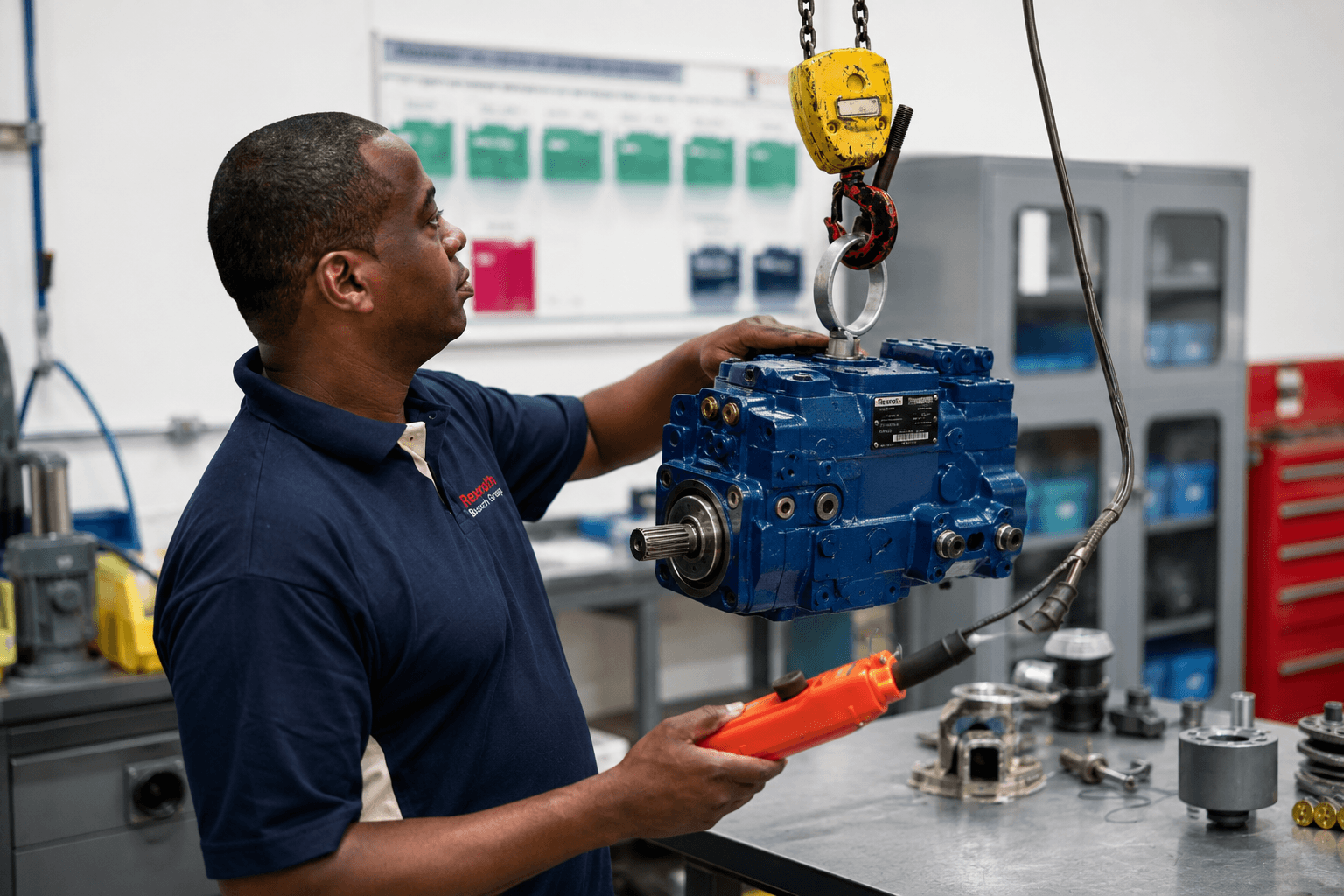
Diagnosticare, service și reparații pentru pompe hidraulice Bosch Rexroth utilizate în aplicații industriale.
Diagnostics
Analysis of symptoms, operating conditions and equipment condition to identify the probable cause of the failure.
Repair
Assessment of the components and completion of the necessary technical interventions to restore the pump to appropriate operating condition whenever repair is feasible.
Testing
Verification of equipment operation after the intervention to confirm the result of the hydraulic pump service process.
What Does the Hydraulic Pump Service Process Involve?
The process begins with equipment identification and the collection of information about how the failure occurred. The hydraulic pump can then be analysed to determine the condition of its components and establish the appropriate technical solution.
Depending on the results of the assessment, the intervention may involve replacing damaged components, reconditioning eligible parts, reassembling the pump and testing the equipment.
At the same time, the original cause of the failure should be considered. If pump damage was caused by contamination, filtration problems, cavitation or other unsuitable conditions within the hydraulic installation, these issues should be investigated before the equipment is returned to service.
The Hydraulic Pump Repair Process at a Glance
- Pump identification and verification of the complete product code;
- Analysis of symptoms and operating conditions;
- Disassembly and inspection of components;
- Identification of wear and the probable cause of failure;
- Selection of the appropriate solution for repair or reconditioning;
- Replacement or reconditioning of eligible components;
- Reassembly of the hydraulic pump;
- Testing after completion of the intervention.
Conclusion – Hydraulic Pump Repair for Industrial Applications
The hydraulic pump is an essential component of an industrial hydraulic system, and unusual noise, oil leakage, excessive operating temperatures or reduced performance may indicate the need for a technical inspection.
A professional hydraulic pump repair process involves much more than simply replacing damaged components. Diagnostics, root-cause identification, inspection of internal components, repair or reconditioning and final testing are all important stages in achieving a reliable technical solution.
At the same time, the hydraulic system in which the pump operates should also be considered. Fluid contamination, inadequate filtration, cavitation, unsuitable operating temperatures or operation outside the recommended parameters can contribute to equipment damage and may cause the same failure to occur again.
For Bosch Rexroth hydraulic pumps, accurate identification of the complete product code and equipment configuration is an important step in determining the appropriate technical solution. Depending on the condition of the pump, repair, reconditioning or complete replacement may be recommended.
Related posts
-
 Bosch Rexroth Hydraulic Pumps – The Complete Guide to Selecting, Repairing and Maintaining Industrial Hydraulic Systems
Discover the complete guide to Bosch Rexroth hydraulic pumps: pump types, industrial applications, selection...Read more
Bosch Rexroth Hydraulic Pumps – The Complete Guide to Selecting, Repairing and Maintaining Industrial Hydraulic Systems
Discover the complete guide to Bosch Rexroth hydraulic pumps: pump types, industrial applications, selection...Read more -
 Hydraulic Cylinders
Discover the role of hydraulic cylinders in industrial applications and the advantages of Bosch Rexroth hydraulic...Read more
Hydraulic Cylinders
Discover the role of hydraulic cylinders in industrial applications and the advantages of Bosch Rexroth hydraulic...Read more -
 Hydraulic Motors
Discover what hydraulic motors are, how they work, and the main types used in industry. Learn how to choose the right...Read more
Hydraulic Motors
Discover what hydraulic motors are, how they work, and the main types used in industry. Learn how to choose the right...Read more
Leave a comment