
.png)
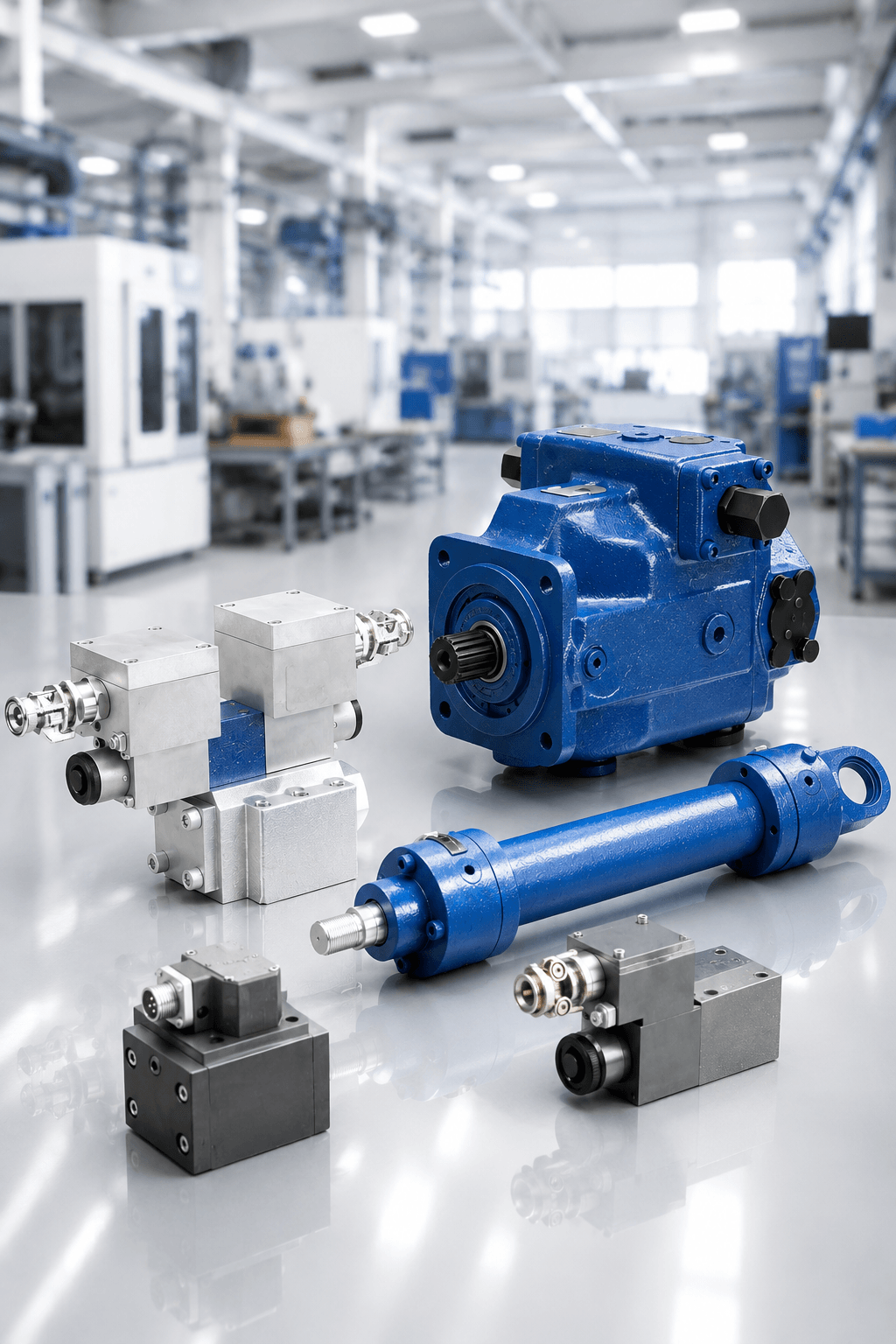
Hydraulic Motors
Hydraulic Motors – Complete Guide for Industrial Applications
Hydraulic motors are essential components in many modern hydraulic systems, converting hydraulic energy into mechanical rotational motion. Thanks to their ability to deliver high torque and operate under demanding conditions, they are widely used in industrial machinery, mobile equipment and complex drive systems.
From industrial equipment and production machinery to heavy-duty applications, choosing the right hydraulic motor can directly influence the performance, efficiency and reliability of the entire hydraulic system.
Bosch Rexroth hydraulic motors are designed for applications that require high performance, precise control and reliable operation. However, selecting the right configuration requires a detailed analysis of the operating parameters and technical requirements of each application.
What will you learn from this guide?
In this article, we explain how hydraulic motors work, explore the main types available and discuss their advantages and most common industrial applications. We will also look at the key technical criteria that should be considered when selecting a hydraulic motor.
We will also explore the role of Bosch Rexroth hydraulic motors in modern hydraulic systems and how the technical expertise of CreatX Technology can support the selection of a solution tailored to the specific requirements of an industrial application.
1. What Are Hydraulic Motors and How Do They Work?
Hydraulic motors are components of hydraulic systems that convert the energy of pressurized fluid into mechanical energy, producing rotational motion. This operating principle makes them suitable for driving a wide range of industrial machinery and equipment where high torque, precise control and reliable operation are required.
From a functional perspective, a hydraulic motor acts as an actuator within a hydraulic circuit. The hydraulic pump supplies the fluid flow required by the system, while the motor uses the available hydraulic energy to generate mechanical rotation.
How Is Hydraulic Energy Converted into Motion?
Pressurized hydraulic fluid enters the motor and acts on its internal components. Depending on the motor design, these may include pistons, gears, vanes or other mechanical elements. The resulting force generates rotation of the motor shaft, allowing mechanical power to be transferred to the machine or mechanism being driven.
The Role of Flow and Pressure
The performance of a hydraulic motor is closely related to the operating parameters of the hydraulic circuit. In general terms, flow rate influences rotational speed, while the available pressure differential contributes to the torque that the motor can generate.
For this reason, a hydraulic motor should not be sized independently from the rest of the system. Operating pressure, flow rate, rotational speed, required torque, duty cycle and load characteristics should all be evaluated together.
Pressure
The pressure differential available across the motor is one of the key factors that determines the torque that can be produced during operation.
Flow Rate
The hydraulic fluid flow through the motor influences rotational speed and must be correlated with motor displacement and the requirements of the application.
Torque
Torque represents the motor's ability to produce rotational force under load and is one of the most important parameters when selecting a hydraulic motor.
Why Are Hydraulic Motors Used in Industry?
One of the main advantages of industrial hydraulic motors is their ability to provide high power density in a relatively compact design. This makes hydraulic drives particularly suitable for applications where installation space is limited but significant mechanical performance is required.
Depending on the technology and system configuration, hydraulic drives can provide effective control over speed and direction of rotation while operating under demanding industrial conditions. These characteristics explain why hydraulic motors are widely used across many types of machinery and industrial installations.
Hydraulic Motor vs. Hydraulic Pump
Although certain hydraulic pumps and motors may share similar design principles, their roles within a hydraulic circuit are different. A hydraulic pump converts mechanical energy from the drive source into hydraulic energy, while a hydraulic motor performs the opposite conversion, transforming hydraulic energy into mechanical rotational energy.
| Characteristic | Hydraulic Pump | Hydraulic Motor |
|---|---|---|
| Main Function | Supplies hydraulic flow to the circuit | Produces rotational motion |
| Energy Conversion | Mechanical → Hydraulic | Hydraulic → Mechanical |
| Output | Hydraulic fluid flow | Torque and shaft speed |
Why Correct Hydraulic Motor Selection Matters
Selecting a motor based only on nominal power is not sufficient. Proper sizing requires an analysis of the complete hydraulic system, including required torque, rotational speed, available pressure and flow, duty cycle, operating conditions and load characteristics.
Incorrect selection can result in insufficient performance, reduced efficiency, excessive heat generation, premature wear or a shorter service life. For complex industrial applications, a technical evaluation of the entire hydraulic circuit is therefore recommended.
What Should You Remember About Hydraulic Motors?
- They convert hydraulic energy into mechanical rotational motion.
- They can deliver high torque for demanding industrial applications.
- Hydraulic flow influences rotational speed.
- Pressure differential is directly related to the available torque.
- The motor must be sized according to the characteristics of the entire hydraulic circuit.
- Different motor technologies are available for different operating requirements.
Bosch Rexroth hydraulic motors cover a wide range of industrial requirements, from standard hydraulic drives to complex applications where performance, control and reliability are essential.
2. Main Types of Hydraulic Motors
There are several types of hydraulic motors, differentiated by their operating principle, displacement, pressure range, rotational speed and ability to deliver the torque required by the application. Choosing the right technology depends primarily on the requirements of the hydraulic system and the operating conditions of the machine.
Industrial applications commonly use piston motors, gear motors and vane motors. Each category has specific characteristics in terms of performance, efficiency, control and suitable areas of application.
There Is No Universal Hydraulic Motor
A motor designed for a high-speed application is not necessarily the best solution for a drive that requires high torque at low speed. For this reason, the motor design and sizing should always be selected according to the actual operating parameters of the application.
Axial Piston Hydraulic Motors
Axial piston hydraulic motors are widely used in industrial and mobile applications that require high power density, efficiency and operation at high pressures. The pistons are arranged approximately parallel to the axis of rotation and convert hydraulic energy into rotational movement of the drive shaft.
Depending on the design, axial piston motors can use different operating concepts, including swashplate and bent-axis configurations. The appropriate design depends on factors such as rotational speed, torque, pressure and the specific requirements of the hydraulic system.
This category also includes a wide range of Bosch Rexroth hydraulic motors developed for industrial and mobile applications where performance, control and reliable operation are important.
Radial Piston Hydraulic Motors
In radial piston motors, the pistons are arranged radially around the motor shaft. This configuration is particularly suitable for applications requiring very high torque at low rotational speeds.
Due to their design characteristics, these motors can be used in heavy-duty industrial drives, rotating mechanisms and other installations where high torque must be transmitted in a controlled manner.
Axial Piston Motors
Suitable for applications requiring high performance, high power density and efficient operation at elevated hydraulic pressures.
Radial Piston Motors
Particularly suitable for applications requiring high torque at relatively low rotational speeds.
Gear Motors
A relatively simple and robust design suitable for many hydraulic applications where compact construction and reliability are important.
Hydraulic Gear Motors
Hydraulic gear motors are characterized by a relatively simple, compact and robust construction. Pressurized hydraulic fluid acts on the internal gear mechanism, causing it to rotate and transferring mechanical motion to the output shaft.
These hydraulic motors are used in applications where reliability, compact dimensions and a straightforward drive solution are important. Their exact operating characteristics depend on the motor design and the conditions within the hydraulic circuit.
Hydraulic Vane Motors
Vane motors use a rotor equipped with movable vanes that are acted upon by pressurized hydraulic fluid. The interaction between the rotor, vanes and motor housing generates the rotational motion required to drive the connected mechanism.
This type of hydraulic motor can be suitable for certain industrial applications that require smooth operation and specific speed and torque characteristics.
Fixed vs. Variable Displacement Hydraulic Motors
Another important distinction is between fixed displacement hydraulic motors and variable displacement hydraulic motors. Motor displacement is generally expressed as the theoretical volume of hydraulic fluid required for one revolution and has a direct influence on the relationship between flow rate, rotational speed and torque.
With a fixed displacement motor, the working displacement remains constant. Motor speed is therefore primarily controlled by adjusting the hydraulic flow supplied to the motor.
Variable displacement motors allow the displacement to be adjusted within the limits of their design. This provides greater flexibility in adapting the relationship between speed and torque to changing operating requirements and can improve the versatility of the hydraulic drive system.
| Hydraulic Motor Type | Main Characteristic | Typical Applications |
|---|---|---|
| Axial Piston | High power density and performance at high pressures | Industrial and mobile machinery, complex drive systems |
| Radial Piston | High torque at low rotational speeds | Heavy-duty industrial drives and rotating mechanisms |
| Gear | Simple, compact and robust construction | General hydraulic applications |
| Vane | Smooth operation and specific speed characteristics | Various industrial applications |
Which Type of Hydraulic Motor Is Right for Your Application?
The selection should not be based solely on the motor design. Two motors from the same category can have significantly different characteristics in terms of displacement, allowable pressure, rotational speed, torque, efficiency and installation requirements.
For industrial applications, the operating parameters of the entire hydraulic system should be evaluated. This makes it possible to select a solution that provides the required performance while avoiding unnecessary oversizing of the system.
Key Criteria That Differentiate Hydraulic Motors
- Motor design and operating principle.
- Fixed or variable displacement.
- Operating pressure and hydraulic flow.
- Required torque.
- Operating speed range.
- Efficiency of the hydraulic drive.
- Duty cycle and operating conditions.
- Installation requirements and working environment.
The range of Bosch Rexroth hydraulic motors makes it possible to configure solutions for a wide variety of industrial and mobile applications. Correct selection should always begin with the technical requirements of the hydraulic system and the machine it is designed to drive.
3. Where Are Hydraulic Motors Used in Industry?
Thanks to their ability to deliver high torque and operate under demanding conditions, hydraulic motors are used across a wide range of industrial and mobile applications. They can drive rotating mechanisms, conveyors, winches, production machinery and many other systems where hydraulic energy must be converted into mechanical rotational motion.
The flexibility of hydraulic drive systems allows motors to be integrated into machines and installations of very different sizes and levels of complexity. However, the motor parameters must be matched to each application, as requirements for torque, rotational speed, pressure, flow rate and duty cycle can vary significantly.
Why Are Hydraulic Motors Suitable for Industrial Applications?
A hydraulic drive system can provide significant torque and power from a relatively compact unit. At the same time, controlling hydraulic flow and pressure makes it possible to adapt motor performance to the requirements of the industrial process.
Hydraulic Motors for Industrial Machinery
In the industrial sector, industrial hydraulic motors are commonly used in equipment that requires robust and controllable drive solutions. They can be integrated into production machinery, processing equipment, material handling systems and auxiliary mechanisms.
Depending on the application, a hydraulic motor may operate continuously or through repeated cycles of starting, stopping and reversing direction. For this reason, motor sizing should consider not only maximum performance requirements but also the actual operating cycle of the machine.
Metallurgy and Heavy Industry
Metallurgy and heavy industry are important areas where hydraulic drive systems are used extensively. Hydraulic motors can be integrated into material handling equipment, rotating mechanisms, processing installations and heavy-duty machinery operating under demanding conditions.
In these applications, robustness, equipment availability and the ability to operate under high loads are particularly important. Correct selection of the motor and the other components within the hydraulic circuit contributes directly to the reliability and performance of the installation.
Industrial Machinery
Drive solutions for rotating mechanisms, processing equipment and different systems integrated into industrial production lines.
Mobile Equipment
Compact hydraulic drive solutions for working mechanisms and other functions used in mobile machinery and heavy equipment.
Material Handling
Hydraulic drives for conveyors, winches, drums, positioning mechanisms and other material handling systems.
Conveyors and Material Handling Systems
Conveying and material handling systems represent another important area of application. A hydraulic motor can be used to drive conveyors, drums, rotating mechanisms, winches and other systems that require controlled rotational movement.
One advantage of hydraulic drive technology is the possibility of adapting the drive to changing loads. In applications involving frequent starts, variable loads or demanding operating cycles, the hydraulic circuit and motor must be designed to operate safely within their specified parameters.
Construction Machinery and Mobile Equipment
Hydraulic technology is extensively used in mobile machinery. Excavators, loaders, cranes and other types of heavy equipment can use hydraulic motors for different working, rotating or drive functions.
Compact dimensions and high power density are particularly valuable in these applications. At the same time, the selected motor must be suitable for variations in load, the required speed range and the operating conditions encountered by the machine.
Agricultural Machinery
Hydraulic motors are also used in agricultural equipment, where they can drive a variety of auxiliary mechanisms. The ability to transmit hydraulic power through hoses and pipes makes it possible to position the motor where a conventional mechanical transmission may be difficult or impractical to install.
The same flexibility can be valuable for specialized machinery where equipment architecture or process requirements call for individually adapted drive solutions.
Energy and Specialized Industrial Applications
In the energy sector and other specialized industrial applications, hydraulic systems can be used to drive and control a variety of mechanisms. Technical requirements may differ considerably between installations, making it essential to select components according to the actual operating parameters of each system.
For critical applications, the analysis should not be limited to the hydraulic motor itself. Pumps, valves, control systems, filtration, cooling and hydraulic fluid characteristics can all influence the performance and reliability of the complete system.
| Industry / Application | Examples | Important Requirements |
|---|---|---|
| Industrial Machinery | Production equipment, rotating mechanisms and processing systems | Reliability, control and repetitive operation |
| Metallurgy & Heavy Industry | Processing installations and heavy-duty equipment | High torque and robust operation |
| Material Handling | Conveyors, winches, drums and positioning mechanisms | Speed control and adaptation to changing loads |
| Mobile Machinery | Construction equipment and heavy mobile machinery | High power density and compact design |
| Agriculture | Agricultural machinery and auxiliary mechanisms | Flexibility and adaptation to the operating cycle |
Bosch Rexroth Hydraulic Motors for Complex Applications
For applications requiring high-performance drive solutions, Bosch Rexroth hydraulic motors can be integrated into systems configured according to the specific requirements of the machine. Different motor concepts, displacement options and configurations make it possible to address a wide range of industrial and mobile applications.
For an efficient solution, the hydraulic motor should be properly matched with the pump, valves, control system and other components of the hydraulic circuit. A system-level approach helps optimize performance and reduces the risk of incorrect component sizing.
Where Can Hydraulic Motors Be Used?
Depending on their design and configuration, hydraulic motors can be used in:
- industrial machinery and production equipment;
- metallurgy and heavy industry;
- conveyor and material handling systems;
- winches, drums and rotating mechanisms;
- construction machinery and mobile equipment;
- agricultural machinery;
- energy-sector installations;
- specialized industrial machinery and applications.
The requirements of the application determine the appropriate motor type, displacement, torque, rotational speed and configuration. For this reason, hydraulic motor selection should always begin with a detailed analysis of the actual operating conditions of the system.
4. How to Choose the Right Hydraulic Motor for Your Application
Choosing the right hydraulic motor should always begin with the actual requirements of the application. There is no universal solution, as every hydraulic system can have different requirements regarding torque, rotational speed, pressure, flow rate, duty cycle and operating conditions.
For complex industrial applications, hydraulic motor selection should not be performed independently from the rest of the system. The motor must be properly matched with the hydraulic pump, control valves, piping, filtration system and other components in order to achieve the required performance and reliability.
First Step: Define the Requirements of the Application
Before selecting a hydraulic motor, you should determine at least the required torque, rotational speed, available pressure and flow rate, duty cycle and load characteristics. The more accurately these parameters are defined, the easier it becomes to identify a properly sized solution.
1. Required Torque
Torque is one of the most important parameters when sizing a hydraulic motor. It represents the rotational force that the motor must generate to start and continuously drive the connected mechanism.
Both operating torque and starting or peak torque should be considered. An application requiring high torque at low speed may require a completely different motor configuration compared with an application designed primarily for higher rotational speeds.
2. Motor Speed
The required rotational speed must be determined according to the operating speed of the driven mechanism. In a hydraulic system, motor speed is closely related to the available flow rate and the displacement of the motor.
Minimum, nominal and maximum speed requirements should all be considered. If the application requires significant variations in speed, the selected solution must allow the operating conditions to be controlled throughout the required speed range.
Torque
Determines the motor's ability to drive the load and should be evaluated for both normal operation and peak load conditions.
Speed
Must be matched to the driven mechanism and correlated with the available hydraulic flow and motor displacement.
Pressure
The available pressure differential influences the torque that the hydraulic motor can generate.
Flow Rate
The available hydraulic flow must be correlated with motor displacement to achieve the required rotational speed.
3. Operating Pressure
Operating pressure is another essential parameter when selecting hydraulic motors. Normal operating pressure, maximum permissible pressure and potential pressure peaks during the operating cycle should all be considered.
The selected motor must be capable of operating safely within the pressure range of the hydraulic system. The available pressure differential across the motor is particularly important because it is directly related to the torque that can be generated.
4. Available Flow Rate
The hydraulic flow supplied to the motor has a direct influence on its rotational speed. For a given displacement, increasing the flow rate generally increases motor speed, within the operating limits specified by the manufacturer and taking volumetric losses into account.
For this reason, the hydraulic motor and pump should be evaluated together. Selecting an inappropriate displacement can result in insufficient rotational speed or require a flow rate that the existing hydraulic system cannot provide.
5. Hydraulic Motor Displacement
Hydraulic motor displacement is typically expressed in cm³/revolution and is a fundamental parameter in determining the relationship between hydraulic flow, rotational speed and torque.
In general terms, for the same flow rate, a larger displacement results in a lower rotational speed and can provide higher theoretical torque at the same pressure differential. A smaller displacement allows higher rotational speeds but changes the relationship between speed and torque.
Depending on the application, either fixed displacement hydraulic motors or variable displacement hydraulic motors can be used. Variable displacement solutions provide additional flexibility by allowing the operating characteristics of the drive to be adapted to changing system requirements.
6. Duty Cycle and Operating Conditions
A hydraulic motor operating continuously for several hours is subjected to different conditions than a motor used only for short, intermittent cycles. Operating duration, number of starts, direction changes and load variations should therefore be considered during the selection process.
The duty cycle also influences system temperature, internal lubrication and component loading. Applications with intensive operating cycles require particular attention to correct sizing and thermal management of the hydraulic system.
7. Hydraulic Motor Efficiency
Under real operating conditions, energy conversion is not perfect. Volumetric and mechanical losses influence the actual performance of a hydraulic motor, which means that sizing should not be based exclusively on theoretical values.
An efficient hydraulic drive requires the motor, pump and control system to work together correctly. Proper component selection can help reduce unnecessary energy losses and improve the overall performance of the machine.
8. Installation and Environmental Conditions
Ambient temperature, contamination, humidity, vibration, mounting position and available installation space can all influence the selection of a hydraulic motor. Certain industries may also have specific requirements regarding equipment protection and operating conditions.
Mechanical compatibility must also be verified. Important factors include shaft configuration, mounting flange, hydraulic connections, direction of rotation and the connection between the motor and the driven mechanism.
| Parameter | What Should Be Evaluated? | Why Is It Important? |
|---|---|---|
| Torque | Operating, starting and peak torque | Determines the ability to drive the required load |
| Speed | Minimum, nominal and maximum rotational speed | Must match the requirements of the driven mechanism |
| Pressure | Operating pressure and maximum values | Influences available torque and component loading |
| Flow Rate | Available hydraulic flow | Influences rotational speed |
| Displacement | Fixed or variable displacement and required value | Influences the relationship between flow, speed and torque |
| Duty Cycle | Continuous or intermittent operation, starts and reversals | Influences component loading and thermal behavior |
Why Is Technical Support Important?
For a complex industrial application, selecting a hydraulic motor based on a single catalogue specification can result in incorrect sizing. The motor parameters should be evaluated together with the architecture and actual operating conditions of the complete hydraulic system.
When selecting Bosch Rexroth hydraulic motors, factors such as motor design, displacement, pressure and speed range, mechanical interface and application requirements should all be considered. Technical support can help identify a configuration that is compatible with the system and capable of achieving the required operating performance.
Hydraulic Motor Selection Checklist
Before selecting a hydraulic motor, you should determine:
- required starting and operating torque;
- minimum, nominal and maximum rotational speed;
- available system pressure;
- available hydraulic flow rate;
- required motor displacement;
- operating cycle and duty requirements;
- load characteristics;
- installation and environmental conditions;
- compatibility with the existing hydraulic system.
Evaluating these parameters makes it possible to select hydraulic motors that are properly matched to the application while reducing the risk of an undersized or unnecessarily oversized solution.
5. Bosch Rexroth Hydraulic Motors and Solutions from CreatX Technology
In modern industrial applications, hydraulic components should be selected according to the technical requirements of the entire system. Bosch Rexroth hydraulic motors are designed for a wide range of applications and can meet different requirements regarding torque, rotational speed, pressure, displacement and control.
For companies operating complex hydraulic systems, selecting the right product is only one part of the process. Correct sizing, proper integration and technical support are essential for achieving an efficient and reliable solution over the long term.
Why Choose Bosch Rexroth for Hydraulic Drive Systems?
Bosch Rexroth offers hydraulic technologies for industrial and mobile applications where performance, precise control and reliability are important. The wide range of available solutions makes it possible to configure hydraulic drive systems according to specific application parameters and actual operating conditions.
Hydraulic Motors for Different Operating Requirements
Depending on the application, hydraulic motors may need to meet very different operating requirements. Some systems require high torque at low rotational speeds, while others require higher speeds, variable displacement or precise control of the hydraulic drive.
Bosch Rexroth solutions include different hydraulic motor technologies and configurations designed for industrial and mobile applications. Selecting the appropriate solution requires matching the characteristics of the motor with the technical requirements of the machine and hydraulic circuit.
Fixed and Variable Displacement Solutions
Depending on system requirements, both fixed displacement hydraulic motors and variable displacement hydraulic motors can be considered. Fixed displacement motors are suitable for applications where the relationship between hydraulic flow and motor speed can be managed through the hydraulic circuit without changing the motor displacement.
Variable displacement solutions provide additional flexibility by allowing the operating characteristics of the motor to be adapted within its design range. This can be particularly useful in applications where speed and torque requirements change during the operating cycle.
Technical Selection
Analysis of torque, rotational speed, hydraulic flow, pressure, displacement and duty cycle to identify a solution suited to the application.
System Integration
Matching the hydraulic motor with the pump, valves, control system and other components of the hydraulic installation.
Technical Support
Support in identifying the appropriate configuration, optimizing the hydraulic system and addressing the technical requirements of the application.
How to Select a Bosch Rexroth Hydraulic Motor
Selecting a Bosch Rexroth hydraulic motor starts with defining the operating parameters of the application. Required torque, rotational speed, available pressure, hydraulic flow, duty cycle and mechanical interface are among the key factors that should be considered when identifying the appropriate configuration.
When replacing an existing hydraulic motor, additional information should also be considered, including the complete product code and configuration, the characteristics of the hydraulic circuit and any modifications previously made to the machine. A motor with apparently similar specifications is not necessarily a direct replacement for the existing unit.
CreatX Technology Expertise in Industrial Hydraulics
CreatX Technology provides technical support for industrial hydraulic systems, from analysing application requirements and selecting components to system integration, maintenance and optimization. Practical experience with Bosch Rexroth technology enables a system-level approach rather than focusing exclusively on an individual component.
For Bosch Rexroth hydraulic motors, this approach is particularly important because final system performance depends on the interaction between the motor, hydraulic pump, valves, control technology and the other components within the circuit.
| Stage | What Do We Analyse? | Objective |
|---|---|---|
| Application Analysis | Load, torque, rotational speed and duty cycle | Define the actual requirements of the system |
| Hydraulic Analysis | Pressure, flow rate and hydraulic circuit architecture | Determine the required motor parameters |
| Motor Selection | Motor design, displacement and configuration | Identify the appropriate Bosch Rexroth solution |
| Integration | Mechanical and hydraulic compatibility | Ensure correct operation within the installation |
| Technical Support | Operation, maintenance and optimization | Support long-term system reliability |
More Than Selecting a Single Component
In an industrial hydraulic system, overall performance is not determined by a single component. Even a correctly sized hydraulic motor may operate below its potential if the pump, valves, filtration, cooling or control system are not properly matched to the requirements of the application.
For this reason, designing and optimizing a hydraulic installation requires an integrated approach. Evaluating the complete hydraulic circuit can contribute to improved efficiency, reliability and equipment availability.
Looking for a Bosch Rexroth Hydraulic Motor?
The CreatX Technology team can help identify a suitable solution for your application based on the actual operating parameters and technical requirements of your hydraulic system.
For the selection of Bosch Rexroth hydraulic motors, provide information such as the complete product code of the existing unit, system pressure and flow rate, required rotational speed and torque, and details about the application.
Request Technical SupportConclusion: Choosing the Right Hydraulic Motor Starts with Your Application
Hydraulic motors are essential components in many industrial drive systems, converting hydraulic energy into mechanical rotational motion. Their ability to deliver high torque, compact design and flexibility across different operating conditions make them suitable for a wide range of industrial and mobile applications.
As discussed throughout this guide, there are several types of hydraulic motors, each designed for different operating requirements. Axial piston motors, radial piston motors, gear motors and vane motors offer different characteristics in terms of torque, rotational speed, efficiency, pressure range and application suitability.
Torque, speed, pressure, flow rate, displacement and duty cycle are among the most important parameters to evaluate before selecting a hydraulic motor. Installation conditions, mechanical compatibility and the characteristics of the complete hydraulic circuit should also be taken into account.
A Hydraulic Motor Is Part of a Complete System
The performance of a hydraulic drive does not depend exclusively on the motor. The hydraulic pump, valves, control system, filtration, cooling and fluid characteristics all contribute to the efficiency and reliability of the complete installation.
For this reason, a system-level approach is important when designing a new hydraulic installation, replacing an existing motor or optimizing an industrial hydraulic system.
Bosch Rexroth Hydraulic Motors for Industrial Applications
For applications requiring performance, reliability and flexibility, Bosch Rexroth hydraulic motors provide solutions for a wide range of industrial and mobile requirements. Different motor concepts, displacement options and configurations make it possible to adapt the hydraulic drive to the specific operating conditions of the application.
However, identifying the right hydraulic motor should always be based on the technical data of the machine and hydraulic system. Particularly in complex applications, professional technical support can help avoid incompatible, undersized or unnecessarily oversized components.
How Can CreatX Technology Help?
CreatX Technology provides expertise in industrial hydraulics and Bosch Rexroth technology, supporting customers from component identification and technical selection to system integration, maintenance and hydraulic system optimization.
When selecting Bosch Rexroth hydraulic motors, our team can analyze the operating parameters of the application and the configuration of the existing system to identify a solution suited to its technical and operational requirements.
Looking for the Right Hydraulic Motor for Your Application?
Whether you need a new hydraulic motor, assistance identifying an existing Bosch Rexroth unit or technical support for sizing an industrial application, the CreatX Technology team can help.
Send us the Bosch Rexroth product code or the technical parameters of your application, and our specialists will help you identify the appropriate solution.
Request a QuoteRelated posts
-
 Bosch Rexroth Hydraulic Pumps – The Complete Guide to Selecting, Repairing and Maintaining Industrial Hydraulic Systems
Discover the complete guide to Bosch Rexroth hydraulic pumps: pump types, industrial applications, selection...Read more
Bosch Rexroth Hydraulic Pumps – The Complete Guide to Selecting, Repairing and Maintaining Industrial Hydraulic Systems
Discover the complete guide to Bosch Rexroth hydraulic pumps: pump types, industrial applications, selection...Read more -
 Hydraulic Cylinders
Discover the role of hydraulic cylinders in industrial applications and the advantages of Bosch Rexroth hydraulic...Read more
Hydraulic Cylinders
Discover the role of hydraulic cylinders in industrial applications and the advantages of Bosch Rexroth hydraulic...Read more
Leave a comment