


Bosch Rexroth Hydraulic Service: Diagnosis, Repairs and Technical Support
Bosch Rexroth Hydraulic Service: Diagnosis, Repairs and Technical Support
Oil leaks, uneven movement or declining machine performance may indicate a hydraulic system problem. A hydraulic service assessment begins with understanding the symptoms and identifying the cause before selecting a repair or replacement component.
The services described in this article apply exclusively to Bosch Rexroth hydraulic equipment and components. The feasibility and scope of the work are established after product identification and assessment of the enquiry, taking account of equipment condition, documentation and parts availability.
The following sections explain diagnosis, the equipment categories that may be assessed and the information needed for an enquiry. They also cover repair and replacement criteria and collaboration through a service agreement.
A slow-moving cylinder or insufficient pressure may have causes in several parts of the circuit. Product identification, the system diagram and the conditions under which the problem occurs help determine the appropriate checks.
Contents
- What does hydraulic service for Bosch Rexroth equipment involve?
- Which Bosch Rexroth equipment may require service?
- How is a hydraulic problem diagnosed?
- When should a component be repaired or replaced?
- How can collaboration be organised through a service agreement?
- What information should you prepare for a hydraulic service enquiry?
1. What does hydraulic service for Bosch Rexroth equipment involve?
A Bosch Rexroth hydraulic service assessment involves examining a component or assembly to establish the cause of a problem and the available options. Depending on the enquiry, assessment may cover the individual product and its relationship with the rest of the circuit.
1.1. From identification to a proposed course of action
The first step is identifying the complete product code and clarifying the observed behaviour. The necessary checks and the feasibility of assessment, repair or replacement can then be established.
- Identification: check the nameplate, product configuration and available documentation.
- Problem clarification: collect symptoms, alarms and operating conditions.
- Technical assessment: establish the applicable checks and operations.
- Proposal: set out the options, work and terms that can be offered.
1.2. The work must be considered in the context of the application
Replacing a component does not automatically remove the cause of failure. Fluid contamination, unsuitable temperatures or circuit loads must be investigated where relevant indications exist.
A Bosch Rexroth code alone does not establish that a product can be repaired. Operations, required parts, final checks and lead time are determined after assessment and specified in the service proposal.
2. Which Bosch Rexroth equipment may require service?
Enquiries about hydraulic service may concern Bosch Rexroth pumps, motors, cylinders, valves or hydraulic power units. These categories help identify the enquiry; acceptance and service feasibility are confirmed for the specific product.
2.1. Hydraulic pumps and motors
Unusual noise, fluid leakage or reduced performance may justify assessment of a hydraulic pump or motor. Symptoms must be considered alongside the supply, fluid, load and circuit parameters.
2.2. Hydraulic cylinders
External leakage, rod damage or uneven movement are useful details for assessment. Repair feasibility depends on the design, surface condition and availability of the required components.
2.3. Directional control valves and other hydraulic valves
Incorrect switching, delayed response or adjustment difficulties may require checking the valve and its control system. For proportional valves and servo valves, the necessary operations and testing facilities depend on the model.
2.4. Hydraulic power units and assemblies
At assembly level, assessment may require correlating the operation of the pump, valve manifold, filtration and sensors. The hydraulic diagram and service history help narrow down the problem.
Send the complete code, clear nameplate photographs and a description of the problem. This information allows the CreatX team to clarify the enquiry and confirm possible next steps.
3. How is a hydraulic problem diagnosed?
Diagnosis during a Bosch Rexroth hydraulic service assessment aims to identify the cause before defining the work. It starts with equipment behaviour: what has changed, when the symptom occurs and under what conditions it recurs.
3.1. Gathering equipment information
The complete Bosch Rexroth code identifies the product configuration. The hydraulic diagram, available parameters and service history provide further information needed to prepare the checks.
- Symptoms: oil leaks, noise, uneven movement or reduced performance.
- Conditions of occurrence: at startup, after warming up, under load or in a particular direction of movement.
- Recent changes: component replacements, fluid changes, adjustments or work on the control system.
- Available data: measured values, alarms and records of machine behaviour.
3.2. Checking the component within the circuit
Depending on the situation, diagnosis may require checking pressure, flow, temperature, electrical supply or pilot conditions. The possibility that the symptom originates elsewhere in the system is also considered.
For example, slow cylinder movement does not, by itself, confirm a cylinder fault. The cause may relate to available flow, a restriction, the control system or the mechanical load. Checks must distinguish between these possibilities.
Measurements and service work must be carried out by qualified personnel in accordance with machine procedures. Stopping the pump does not guarantee pressure release: accumulators and isolated volumes may retain energy. Before disassembly, isolate energy sources, depressurise the circuit and secure loads.
4. When should a component be repaired or replaced?
The decision follows assessment of the Bosch Rexroth product and application requirements. Parts cost is only one criterion; component condition, the feasibility of final testing and the time needed for the work also matter.
4.1. When can repair be considered?
Repair may be an option when damage allows function to be restored, compatible components are available and the necessary checks can be completed. Operations are defined for the specific model, rather than assuming that every product in a family can be repaired in the same way.
- Technical condition: wear and damage to the main components.
- Required parts: identification, compatibility and availability.
- Final verification: the ability to confirm function after the work.
- Commercial terms: cost, lead time and the warranty specified in the quotation.
4.2. When is replacement considered?
Replacement may be justified by significant damage, unavailable parts or the inability to carry out a verifiable repair. An alternative must be assessed mechanically, hydraulically and, where applicable, electrically, including its function within the circuit.
For discontinued products, similar codes or dimensions do not establish equivalence. Identifying a replacement requires checking the configuration and technical documentation.
Assess repair cost together with testing, lead time and the terms offered. For replacement, include any adaptations, adjustments and checks needed for integration. Addressing the original cause remains important in both cases.
5. How can collaboration be organised through a service agreement?
A hydraulic service agreement defines the framework for supporting the Bosch Rexroth equipment included in the agreement. Its purpose is to clarify services, responsibilities and the conditions under which requests are handled.
5.1. What should be agreed before collaboration begins?
- Covered equipment: the list and identification of Bosch Rexroth products or assemblies.
- Included services: the agreed activities and work requiring a separate quotation.
- Request handling: contact persons and the information needed to process an enquiry.
- Service conditions: location, access, responsibilities and agreed timeframes.
- Documentation: how work, findings and recommendations are reported.
5.2. Collaboration starts with your equipment
An equipment list, available documentation and the support required by the in-house team help prepare a proposal. This information helps define a scope of service suited to the installation and production requirements.
Response times, service availability, parts and commercial conditions are explicitly agreed. An agreement does not automatically mean immediate attendance or inclusion of every repair and component.
For details, visit the page dedicated to CreatX service agreements and send the team the requirements you would like to discuss.

6. What information should you prepare for a hydraulic service enquiry?
A well-documented enquiry about Bosch Rexroth hydraulic service helps identify the product and clarify possible next steps. More precise information reduces the questions needed before assessment.
- Product identification: the complete type code, material number and serial number, where available.
- Clear photographs: the nameplate, component and its installation area.
- Problem description: the symptoms and the conditions under which they occur.
- System data: the hydraulic diagram, known parameters and fluid used.
- Relevant history: recent service work, replacements or adjustments.
- Enquiry requirements: equipment location, contact person and preferred timeframe.
If the nameplate cannot be accessed safely, send the documents and photographs available. The need for removal and preparation requirements for shipping should be clarified before sending the equipment.
After reviewing the information, the team can confirm whether the enquiry falls within the available scope of service and what checks or clarifications are needed to proceed.
Conclusion: hydraulic service based on identification and technical assessment
A Bosch Rexroth hydraulic service assessment starts with identifying the equipment and understanding the problem. Diagnosis, component condition and parts availability contribute to selecting an appropriate course of action.
Whether you have a one-off enquiry or wish to discuss a service agreement, application information helps establish a clear framework for collaboration. The services described apply exclusively to Bosch Rexroth hydraulic products, and service feasibility is confirmed for each enquiry.
Need service for Bosch Rexroth hydraulic equipment?
Send the CreatX Technology team the product code, nameplate photographs and a description of the problem. We will discuss your enquiry and clarify the options for assessment and quotation.
Send a service enquiry Explore service agreementsRelated posts
-
 Bosch Rexroth Hydraulic Pumps – The Complete Guide to Selecting, Repairing and Maintaining Industrial Hydraulic Systems
Discover the complete guide to Bosch Rexroth hydraulic pumps: pump types, industrial applications, selection...Read more
-
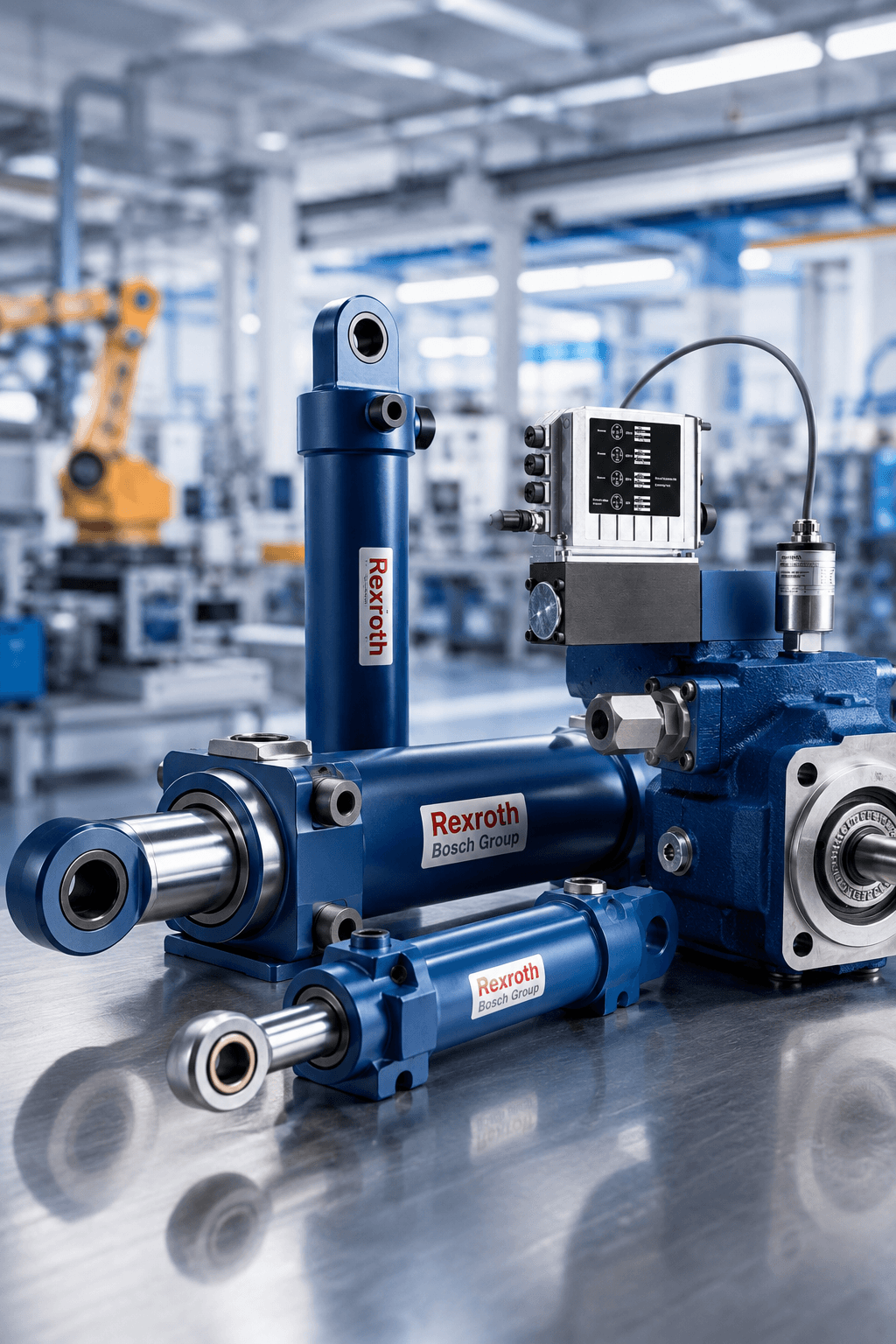 Hydraulic Cylinders
Discover the role of hydraulic cylinders in industrial applications and the advantages of Bosch Rexroth hydraulic...Read more
-
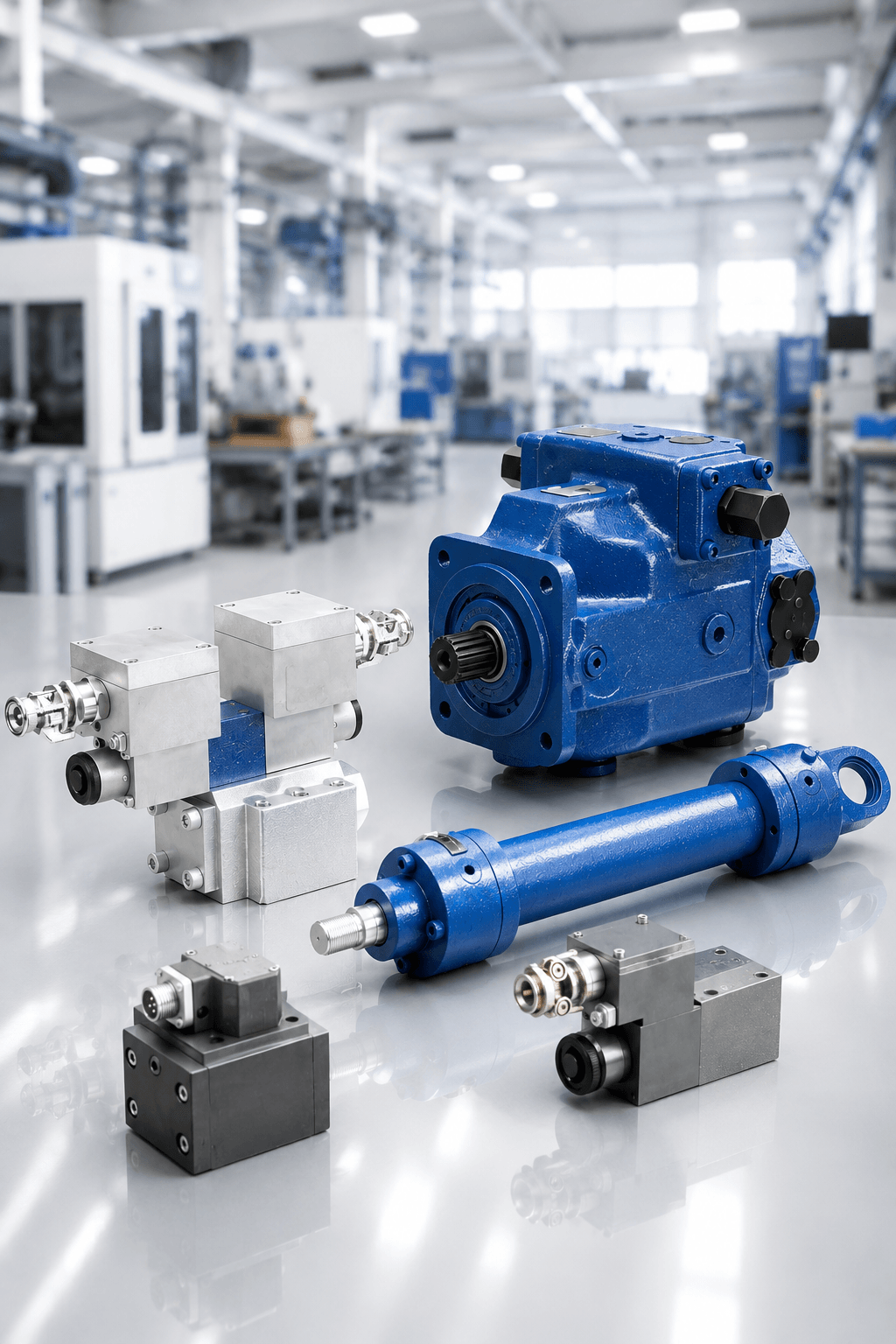 Hydraulic Motors
Discover what hydraulic motors are, how they work, and the main types used in industry. Learn how to choose the right...Read more
-
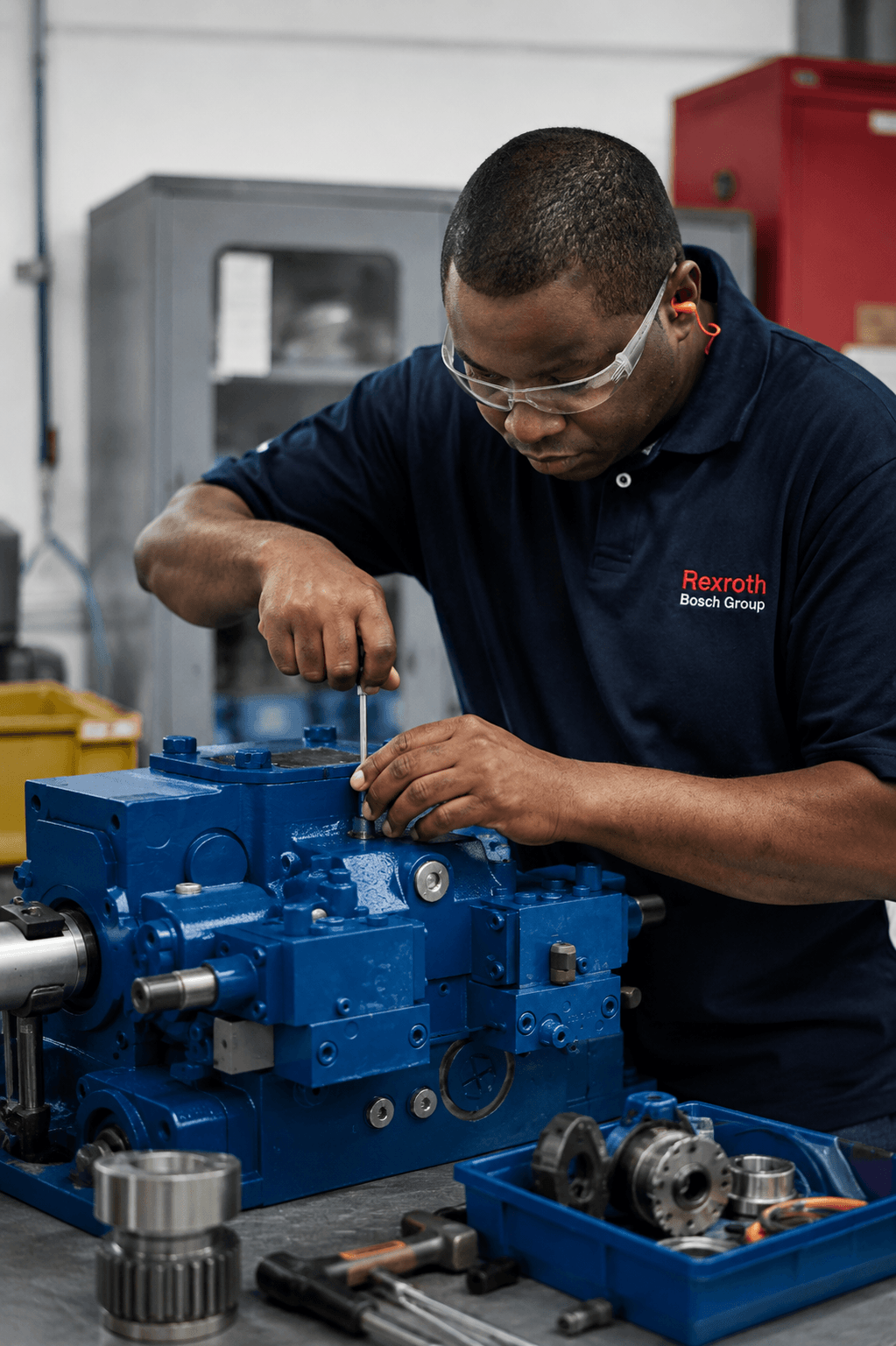 Hydraulic pump repairs
Find out when hydraulic pump repairs are necessary, what the most common failures are, and how diagnostics,...Read more
-
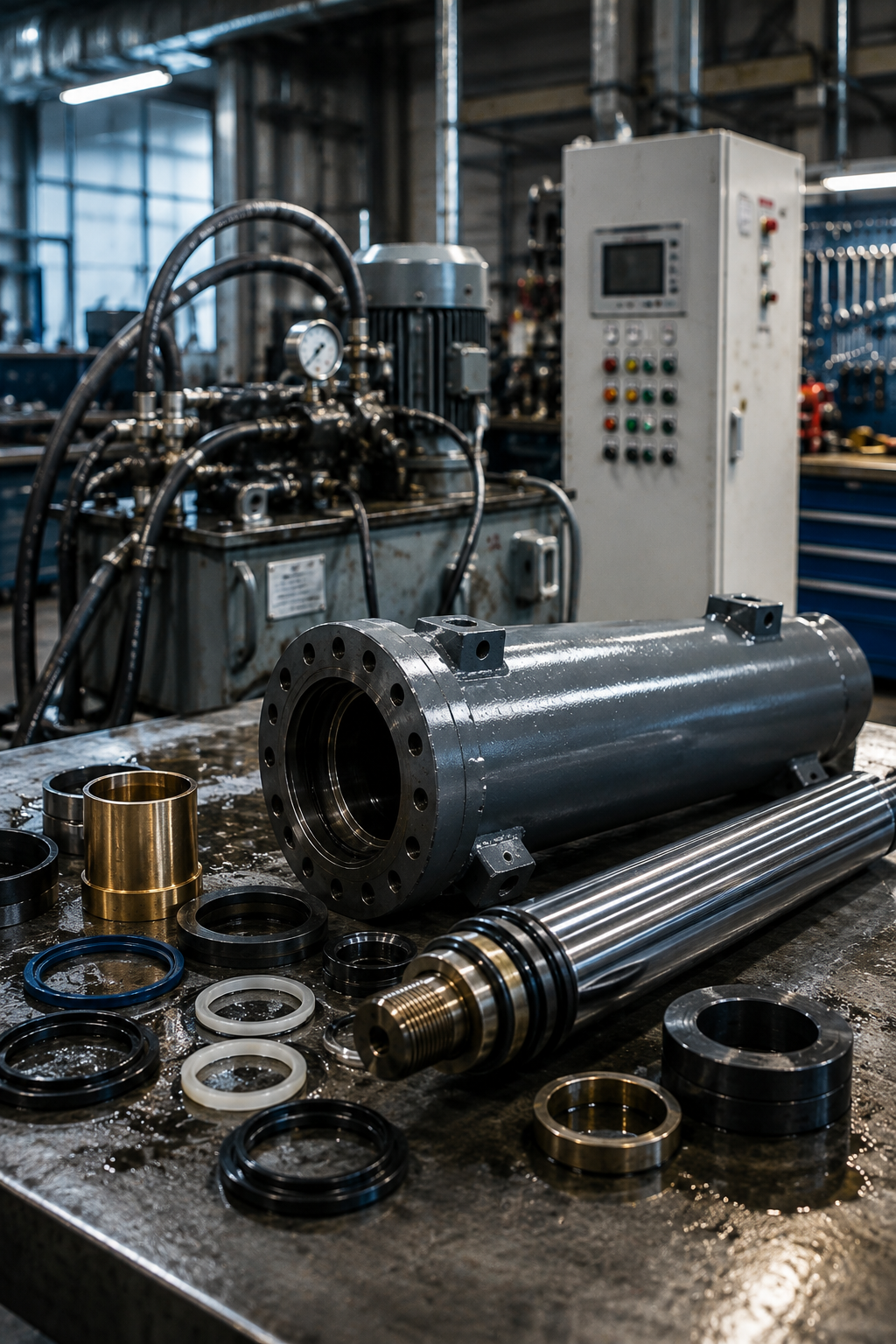 Hydraulic Cylinder Repair – When Is It Necessary and What Does It Involve?
Discover when hydraulic cylinder repair is required, the most common failures, and what the diagnosis, repair, and...Read more
Leave a comment